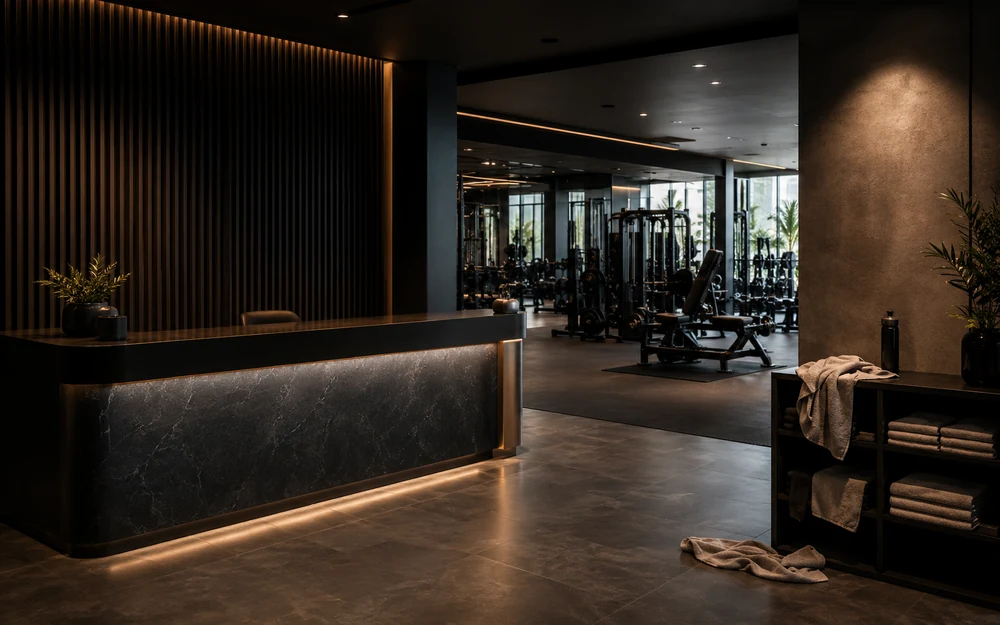
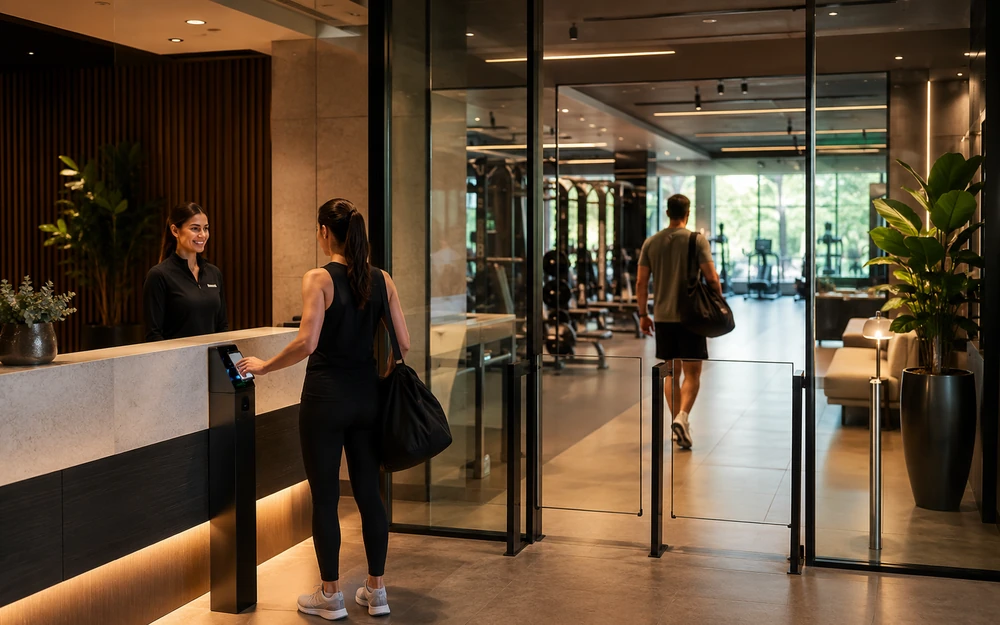
What Happens When a Gym Moves From Old-School to Neighborhood Premium

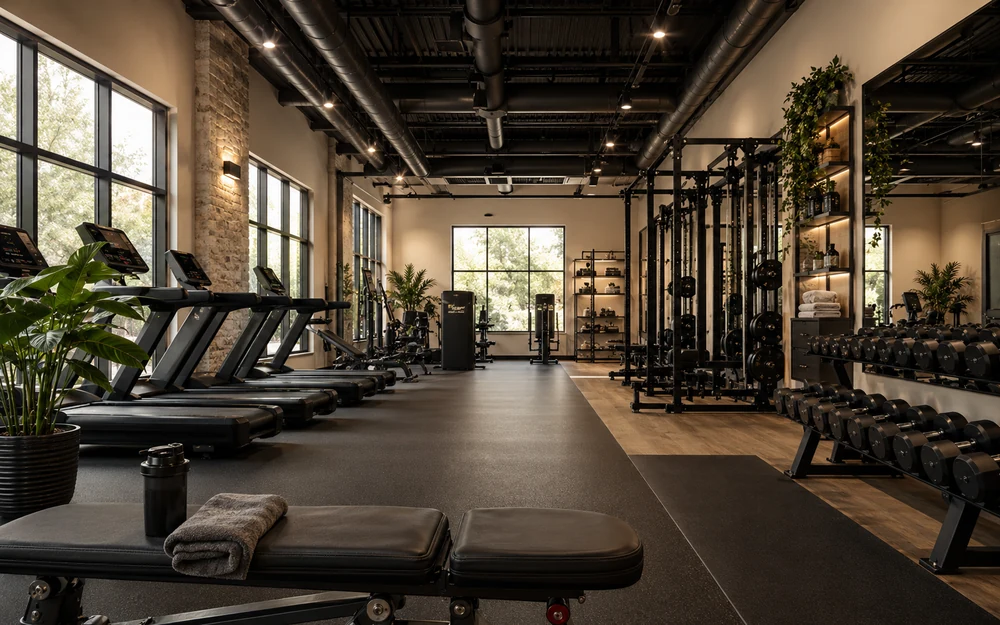
A gym turnaround changes more than the facility. It changes what clients expect, what they forgive, and how they judge the daily experience.
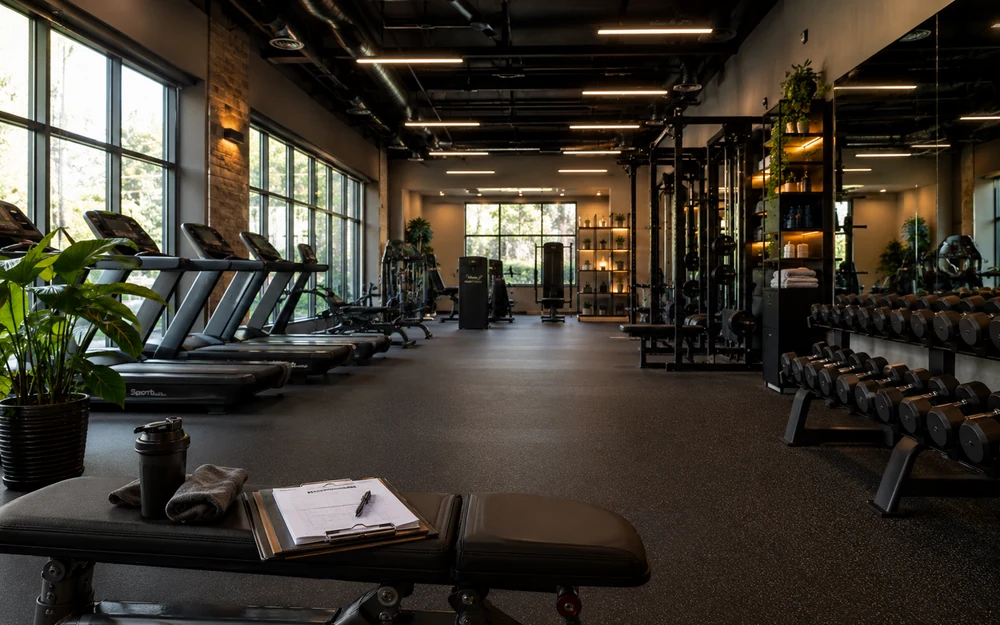
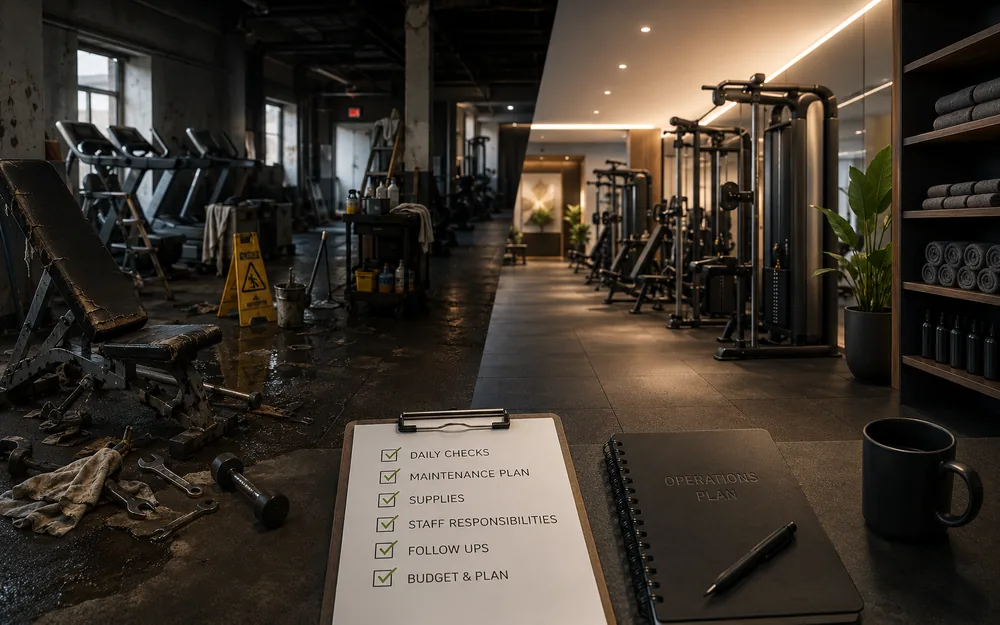
When a gym moves from old-school to neighborhood premium, the change is not only visual. New equipment, cleaner walls, better lighting, repaired showers, and stronger standards all matter. But the deeper change happens in the client’s mind.
The same club is no longer judged by the same standard.
What clients once accepted as part of a rough, old-school environment may start to feel like poor execution. What once looked normal may start to look neglected. What once felt “part of the deal” may no longer fit the new price, new positioning, or new expectations.
This is why a turnaround has to be managed carefully. The gym is not only improving the space. It is changing the category people place the business in.
Premium does not only mean a better look. It means a better daily experience with fewer frictions, clearer standards, and stronger control.
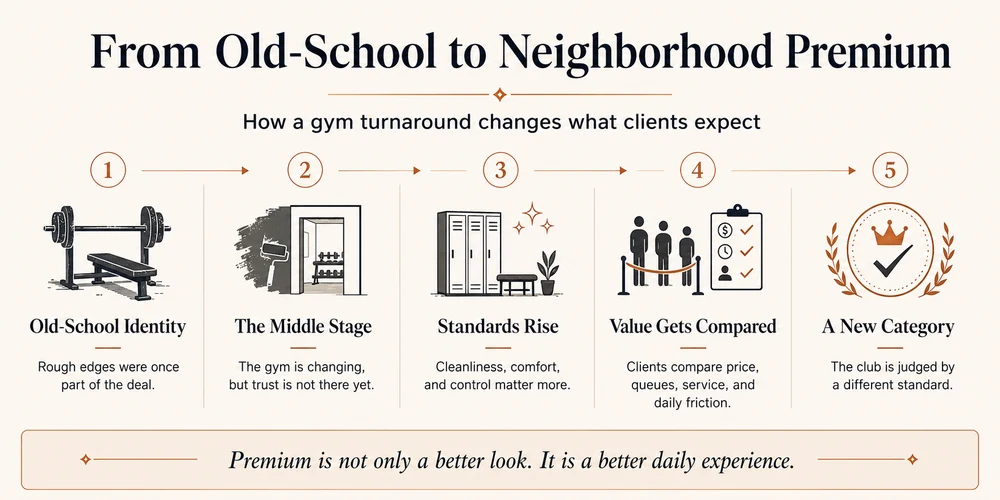
How a Gym Turnaround Changes Client Expectations
A gym turnaround is often described through visible improvements. New machines. Better paint. Cleaner locker rooms. Updated lighting. Stronger maintenance. A more professional environment.
Those improvements are important, but they are not the whole story.
The real shift happens when clients stop seeing the gym as an old-school place with rough edges and start seeing it as a neighborhood premium club. That category change affects everything.
Clients compare differently. They complain differently. They notice different details. They may become less forgiving of things they once ignored.
This does not mean clients become unreasonable. It means the gym has changed the promise.
When the promise changes, the standard changes with it.
The Old Identity Had Its Own Logic
An old-school gym can have a strong identity. It may feel serious, simple, tough, local, and familiar. Some clients like that. They may not expect perfect design, luxury finishes, or a polished member experience.
In that environment, rough edges can sometimes be accepted because they match the story of the club.
Old equipment may be tolerated if the gym feels authentic. Simple locker rooms may be accepted if the price is lower. A rough look may even feel part of the atmosphere for some members.
But this tolerance has limits. Even old-school gyms still need safety, cleanliness, working equipment, and basic respect for the member experience.
The important point is that old-school positioning creates one set of expectations. Premium positioning creates another.
A turnaround moves the gym from one expectation system to another.
Managing the Transition Stage
The Dangerous Middle Stage
The most fragile part of a turnaround is often the middle stage.
The gym is no longer fully old-school, but it is not fully premium yet. Some areas look better. Other areas still feel neglected. Some equipment has been upgraded. Other equipment still looks old. Staff standards may be changing, but not consistently. Clients can feel progress, but they can also see unfinished work.
This stage can create confusion.
Old clients may feel that the gym is losing its original identity. New clients may feel that the gym is not premium enough yet. Management may be investing heavily, but the experience may still feel uneven.
This is where execution matters.
The gym cannot rely only on future plans. It has to manage the daily experience during the transition. Clients need to see that the change is controlled, not random.
Renovation Is Visible, but Category Change Is Emotional
Renovation changes what people see. Category change changes what people expect.
A client may notice new paint, cleaner windows, better machines, or a repaired shower area. But after those improvements appear, the client may also start expecting better follow-through everywhere else.
If the club looks more premium but staff communication remains weak, the mismatch becomes obvious. If the equipment improves but the locker room still feels neglected, the client notices the gap. If the price increases but daily friction remains high, the new positioning feels incomplete.
This is why a turnaround cannot be treated only as a renovation project.
The gym must also update its routines, communication, staff standards, cleaning checks, maintenance follow-up, and customer experience habits.
Otherwise, the building may look better while the operation still feels old.
Communication Turns Disruption Into Progress
During a gym turnaround, clients need to understand what is happening.
They do not need a long internal report. They do not need every budget detail. But they do need enough information to reduce uncertainty.
What is being improved? Why is it being changed? How long will disruption last? What should clients expect next? Which areas are temporary? Which changes are part of the long-term plan?
Without communication, clients create their own story.
Some may think the gym is disorganized. Some may think prices are rising without a clear reason. Some may think unfinished work means weak management, even when the business is actually improving.
Clear communication turns disruption into progress.
What Neighborhood Premium Actually Means
Premium Does Not Mean Luxury
Neighborhood premium does not have to mean luxury.
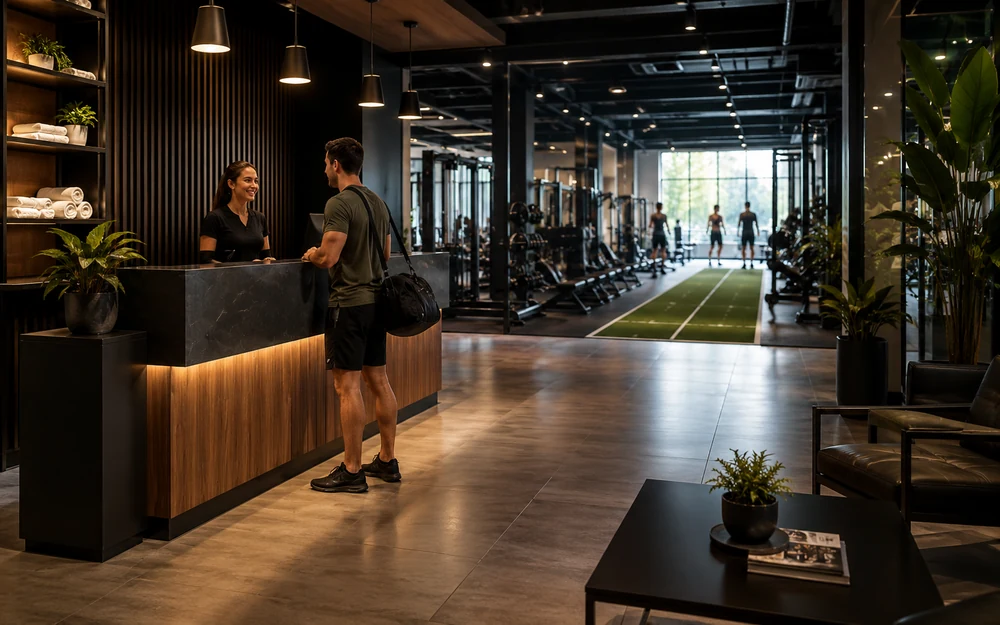
It does not require marble walls, unnecessary decoration, or pretending to be something the gym is not. In many local markets, premium simply means that the daily experience feels cleaner, more reliable, more controlled, and easier to trust.
Premium means fewer broken promises.
The equipment works. The facility feels cared for. The locker room does not create unnecessary stress. Staff know what is happening. Problems are noticed. Communication is clearer. Standards are visible.
Clients may not use the word “operations,” but they feel the result of operations every time they train.
That is why premium is not only a design decision. It is an execution standard.
The Real Premium Signal Is Control
The strongest premium signal is not luxury. It is control.
Clients feel control when the gym is clean, organized, predictable, and responsive. They feel it when problems are noticed before they become complaints. They feel it when staff understand the environment. They feel it when the gym does not look like it is constantly catching up.
Control is what makes a premium promise believable.
A gym can have expensive equipment and still feel unmanaged. It can have simple design and still feel premium if the standards are consistent.
This is why category change is not only a branding issue. It is an operational issue.
Facility Standards Clients Notice
Equipment Signals the New Standard
Equipment is one of the clearest signals in a gym turnaround.
Clients can immediately see whether machines look old, worn, ignored, or unreliable. They can also see when equipment begins to match the new direction of the club.
This does not mean every machine must be the newest model. But equipment must support the level of experience the gym is trying to create.
If the gym wants to move toward neighborhood premium, equipment can no longer look like a collection of delayed decisions. It needs to feel intentional, safe, maintained, and consistent with the new standard.
This is why gym equipment modernization can change more than the look of the floor. It can change how clients judge the seriousness of the entire turnaround.
When equipment improves, clients see proof that the gym is moving forward.
Locker Rooms and Showers Carry More Weight Than Owners Think
Some owners focus heavily on the workout floor and underestimate locker rooms, showers, restrooms, and transition areas.
Clients do not separate these areas from the gym experience. For many people, the workout does not begin when they touch a machine. It begins when they enter the building, check in, change clothes, use the restroom, or prepare for training.
After the workout, the shower and locker room can define the final impression.
This matters even more when the gym is trying to become neighborhood premium. A better training floor cannot fully compensate for a weak shower experience, poor cleanliness, bad smells, inconsistent hot water, or a locker room that feels forgotten.
Facility recovery is part of repositioning. Projects such as gym shower system recovery matter because they affect comfort, trust, cleanliness, and the way clients judge the club before and after the workout.
How Existing and New Clients Respond
Old Clients May Resist the New Standard
Not every old client will immediately like the change.
Some members may feel attached to the old identity. They may not want stricter standards, better organization, cleaner rules, new pricing, new equipment layout, or changes to the atmosphere. For them, the old gym may have felt familiar and comfortable.
This resistance is normal.
A turnaround does not only improve the business. It also changes routines that some people were used to. The gym may become cleaner, more structured, and more professional, but that can still feel disruptive to clients who liked the old version.
Management should not ignore those clients. But it also cannot allow the old standard to block the new positioning.
The goal is not to erase the old identity completely. The goal is to keep what was valuable while removing the weaknesses that limited the business.
New Clients Arrive With Higher Expectations
New clients do not judge the gym through old memories.
They do not know what was fixed. They do not know how difficult the turnaround was. They do not know which problems were inherited from the previous stage of the business.
They judge what they see now.
If the gym looks neighborhood premium, new clients will expect a more consistent experience. They will expect staff to know what is happening. They will expect cleaner facilities. They will expect equipment to work. They will expect the environment to feel controlled.
This is a good thing, but it raises pressure on the operation.
A gym that attracts higher-expectation clients must be ready to serve them. Otherwise, the new positioning creates disappointment instead of loyalty.
How Clients Compare Price and Value
Price Comparison Starts Immediately
When a gym moves toward premium positioning, price comparison begins almost immediately.
Some clients will compare the club to cheaper gyms. They may look at the monthly difference and ask whether the higher price is worth it.
At first, the cheaper option may seem attractive. The client may think they are only saving money.
But the real comparison is not only membership price. It is the total training experience.
A cheaper gym may have more crowding, longer waits, weaker staff capacity, less predictable cleanliness, fewer comfort standards, or more daily friction. The client may not feel that immediately in the sales process. They may feel it during workouts.
This is why the premium gym must make its difference visible. The higher price has to be connected to a better daily experience, not just a nicer image.
The Cheaper Gym May Look Better Until the Client Trains There
A client may leave over a price difference that looks small but emotional.
Maybe the difference is twenty, thirty, or forty dollars per month. On paper, the cheaper option may look reasonable. But after switching, the client may realize the cost was not only financial.
They may wait for benches. They may lose time at the cable station. They may adjust workouts around crowded equipment. They may deal with a locker room that feels less controlled. They may find that staff are too overloaded to help consistently.
The lower price may come with a higher daily cost in time, frustration, and lost training flow.
This does not mean cheaper gyms are bad. It means different business models create different experiences.
A neighborhood premium gym must understand this clearly. It is not selling luxury. It is selling a more controlled and predictable training environment.
Staff Execution Must Match the Facility
Staff Friendliness Is Also an Operational Outcome
Staff friendliness is not only a personality trait. It is also an operational outcome.
In a high-volume, low-price model, one staff member may handle a very large number of interactions during a shift. Even a good employee can become tired, rushed, or less available when the operating model puts constant pressure on them.
In a neighborhood premium gym, the expectation is different. Staff may not be better people, but the business model should give them more capacity to notice, communicate, help, and follow through.
That capacity matters.
Clients feel whether staff are present or just physically in the building. They feel whether employees understand the standards. They feel whether someone notices problems before complaints happen.
This is why gym staff training systems become more important as the facility standard rises. The team has to match the promise of the repositioned gym.
Staff Standards Must Rise With the Facility
One of the risks in a turnaround is improving the facility faster than the staff system.
The space may look better, but the service habits may remain old. The equipment may improve, but communication may still feel inconsistent. The locker room may be repaired, but staff may not know how to monitor standards throughout the day.
This creates a gap between appearance and execution.
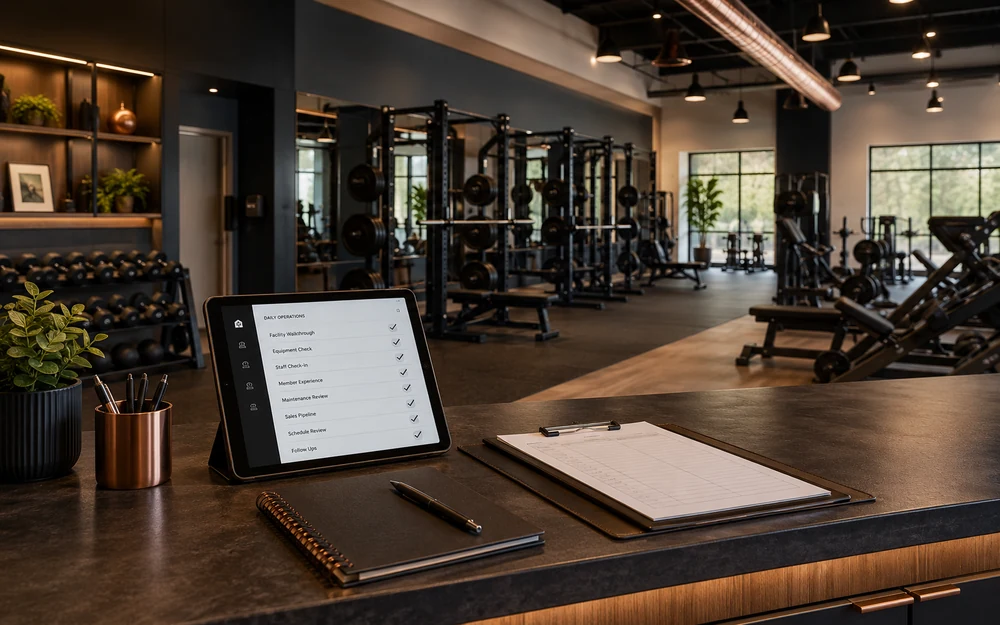
When a gym becomes more premium, staff routines need to become more intentional. Daily checks, issue reporting, client communication, cleaning awareness, maintenance escalation, and front desk behavior all matter more.
Premium positioning makes weak execution more visible.
The better the facility looks, the harder it becomes to excuse operational inconsistency.
Operational Control Makes the Standard Sustainable
Cost Control Supports the New Standard
A gym cannot maintain a stronger standard if the operating model is weak.
Premium positioning requires visible improvements, but it also requires the business to sustain those improvements. That means maintenance, supplies, staffing, vendor follow-up, cleaning standards, and equipment planning all need realistic control.
If costs are not understood, the gym may improve visually but struggle operationally. Problems may return. Repairs may be delayed. Staff may not have the support they need. The client experience may become inconsistent again.
This is where gym operational cost optimization connects to member experience. Cost control is not only about spending less. It is about making sure the business can support the standard it is promising.
The Gym Is Reclassified Through Daily Experience
A gym does not become neighborhood premium because it says so. It becomes neighborhood premium when clients feel the difference repeatedly.
They feel it in the equipment. They feel it in the locker room. They feel it in staff awareness. They feel it in cleanliness, communication, maintenance, comfort, and control.
One improvement may create interest. Repeated consistency creates belief.
That is the real goal of a gym turnaround: not only to make the club look better, but to make the business easier to trust.
A gym becomes neighborhood premium when the daily experience proves that the standard has changed.
Planning a Gym Turnaround?
Build the New Standard Into the Operation
If the facility is changing but the operating systems have not caught up, I can help identify the gaps and build a practical implementation plan.
No pressure. The first conversation is used to understand the situation and determine whether the project is a practical fit.