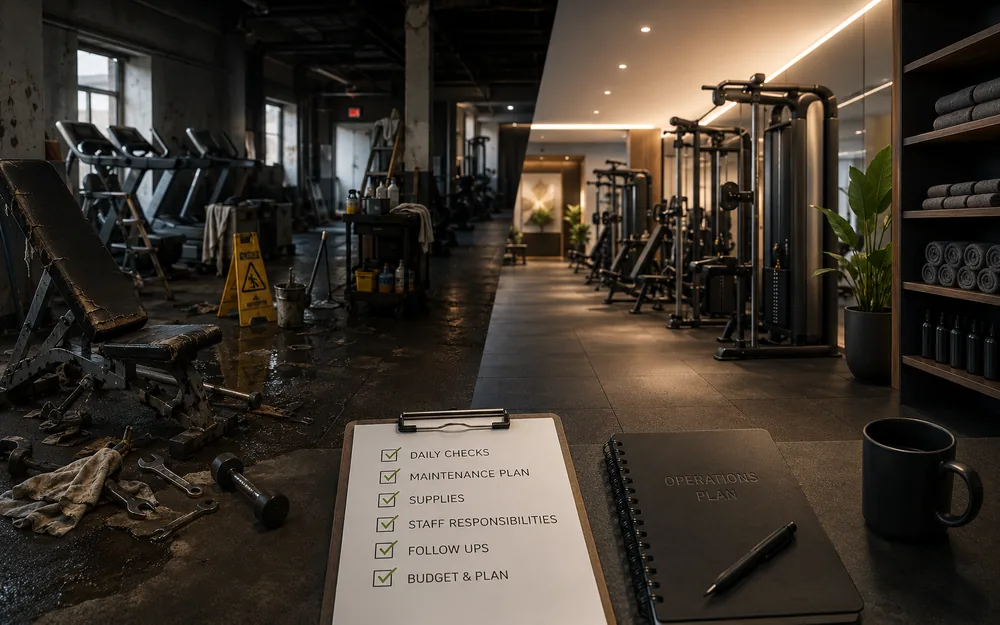
Why Service Gaps Hurt Gym Member Retention


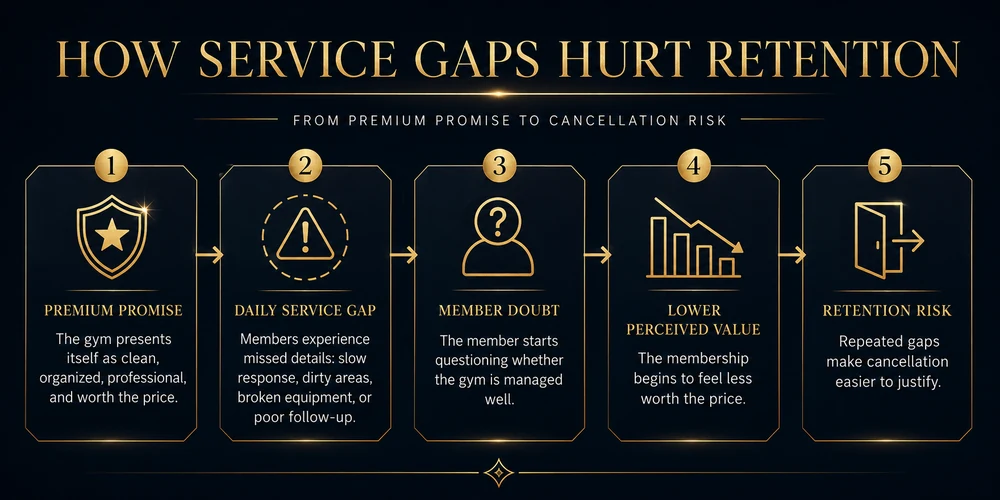
Service gaps hurt retention when the daily member experience does not match what the gym promises.
Gym member retention is not only about price, location, or equipment variety. Those things matter, but they are not the whole story.
Many members leave because the gym slowly loses their trust. Not always through one major failure. Often through small service gaps that repeat over time.
A service gap appears when the promise of the gym is stronger than the experience members actually receive.
This is especially important for gyms that position themselves as premium. A premium gym creates higher expectations. Members expect the space to feel clean, organized, responsive, professional, and worth the membership price.
If the daily experience does not support that promise, members notice the gap.
- The gym looks premium, but the locker room feels neglected.
- The price feels premium, but staff response feels weak.
- The brand feels premium, but equipment stays broken too long.
- The website feels polished, but daily follow-up feels inconsistent.
Over time, these gaps can become more damaging than one obvious problem. They teach members that the gym may not be managed as well as it presents itself.
That is where retention begins to weaken.
Retention Starts Before Cancellation
By the time a member cancels, the decision may already be old.
The cancellation form is usually the final step, not the beginning of the problem. Before that moment, the member may have already felt disappointed many times.
Maybe they noticed the same dirty area too often. Maybe staff did not know how to answer a simple question. Maybe a machine stayed broken for weeks. Maybe towels were missing again. Maybe the shower area did not feel clean or comfortable. Maybe they reported something and never heard anything back.
One small issue may not cause cancellation. But repeated issues create a pattern.
Most members do not leave after one small service failure. They leave after the same type of failure starts to feel normal.
This is why retention should not be treated only as a sales problem. It is also an operations problem.
A gym can sell memberships well and still lose members if the daily experience does not support the promise that was sold.
Premium Positioning Raises Expectations
Premium positioning can help a gym stand out. It can support stronger pricing, better branding, and a more attractive customer image.
But premium positioning also creates a higher standard.
When a gym presents itself as premium, members expect more consistency. They expect details to be managed. They expect the space to feel cared for. They expect staff to be present and helpful. They expect equipment to work. They expect locker rooms and showers to support the price they are paying.
This does not mean everything must be perfect every day. No gym is perfect. Problems happen in every facility.
The issue is not whether a problem appears. The issue is whether the gym responds in a way that protects trust.
Premium members are not only paying for access. They are paying for confidence. They want to feel that the gym is under control.
When that confidence disappears, the membership starts to feel less valuable.
Small Service Gaps Become Trust Problems
Service gaps often begin as small details.
- A front desk issue that is not handled well.
- A dirty shower area that stays dirty too long.
- A broken machine with no clear repair status.
- A member question that receives no useful answer.
- A complaint that disappears without follow-up.
- A towel or supply issue that keeps repeating.
Each issue may look minor from the business side. But from the member side, these details shape the feeling of the gym.
Members do not always separate departments in their mind. They do not think, “This is only a maintenance issue,” or “This is only a staffing issue.” They simply judge the gym experience as a whole.
If enough details feel unmanaged, the member begins to question the business.
Is the gym really premium? Is the price still fair? Does management notice these problems? Will anything improve?
Once members start asking those questions, retention becomes more fragile.
Staff Response Can Close or Widen the Gap
Sometimes the problem itself is not the most damaging part. The response is.
A member can often understand that equipment breaks, supplies run out, vendors delay work, or a facility issue appears unexpectedly. Most reasonable members do not expect a gym to be free of problems.
But they do expect the gym to respond like it is managed.
If staff know what is happening, communicate clearly, and show that the issue is being handled, the member may still feel confident. The problem exists, but the gym feels in control.
If staff do not know what is happening, do not care, give unclear answers, or avoid responsibility, the gap becomes larger.
This is why staff training is not only about friendliness. It is part of retention.
Projects such as Gym Staff Training System matter because the goal is not only to tell employees what to do. The goal is to create routines, standards, documentation, and follow-up that help staff respond better during daily operations.
A strong staff response can protect trust even when something goes wrong.
Facility Gaps Damage Perceived Value
Facility gaps are especially dangerous because they are physical. Members see them, touch them, and experience them directly.
A broken machine is visible. A dirty shower is visible. A messy locker room is visible. Worn equipment, weak lighting, missing supplies, and neglected details all affect how members judge the value of the membership.
For a premium gym, this matters even more.
Premium pricing is easier to support when the facility feels clean, safe, organized, and maintained. But when the physical environment does not match the price, the member starts comparing what they pay with what they receive.
That question is dangerous for retention.
Locker rooms and shower areas are a good example. Members may forgive an old design more easily than they forgive a space that feels dirty, uncomfortable, or ignored. Cleanliness, privacy, maintenance, and comfort all affect trust.
This is why a project like Men’s Shower Room Renewal is more than a facility improvement. It helps close a service gap between what members expect from the gym and what they experience in one of the most sensitive areas of the facility.
Equipment Is Part of the Service Experience
Equipment is often treated as a capital expense, but members experience it as service.
If equipment looks old, damaged, unsafe, dirty, or constantly out of order, members do not only see a maintenance problem. They see a service gap.
They may start to feel that the gym is not reinvesting enough, not paying attention, or not protecting the quality of the training experience.
This is especially true when a gym wants to look premium. Premium does not always mean every machine must be brand new. But it does mean the equipment should feel safe, maintained, organized, and appropriate for the price.
When outdated and repair-heavy equipment affects the customer experience, the issue becomes larger than repairs. It affects safety, perception, trust, and revenue potential.
That is the logic behind projects such as Gym Equipment Modernization, where replacing old equipment supported both the member experience and the operating model of the business.
Service Gaps Are Operational Signals
A service gap should not be treated only as a complaint.
Complaints are useful, but they are often only the visible part of a deeper operational issue. If the same complaint repeats, the problem is no longer just one unhappy member. It is a pattern.
Repeated service gaps can point to weak systems:
- No clear ownership.
- No daily checklist.
- No repair tracking.
- No staff follow-up routine.
- No realistic maintenance budget.
- No system for reviewing recurring complaints.
This is where service and operations connect.
A gym cannot protect retention only by reacting to complaints one by one. It needs to see patterns, assign responsibility, and close the gaps before they become normal.
This connects directly with the idea in From Daily Firefighting to Operational Control. Strong gyms do not simply put out fires every day. They build visibility, priorities, ownership, budgeting, and follow-up.
Service gaps are one of the signs that operational control needs to improve.
First Impressions and Retention Are Connected
First impressions matter, but retention depends on repeated impressions.
A new member may join because the gym looks attractive, the tour feels good, and the sales process creates confidence. But after joining, the member keeps testing the promise.
Every visit either confirms the decision or weakens it.
If the first impression was strong but the daily experience is inconsistent, the member may feel disappointed. The gap between expectation and reality becomes clearer over time.
This is why the ideas in The First Five Minutes Inside a Gym Matter do not stop at the first visit. The same details that shape first impression also shape long-term trust: smell, atmosphere, staff, cleanliness, and equipment.
Retention is built by making those details consistent.
Price Becomes a Bigger Problem When Service Feels Weak
Members do not judge price in isolation.
They judge price against the experience they receive.
A membership can feel reasonable when the gym is clean, organized, responsive, and reliable. The same membership can feel expensive when the member keeps seeing service gaps.
This is why discounting is not always the right answer to retention problems.
If the real issue is weak service execution, lowering the price may not fix the reason members are losing trust. It may only reduce revenue while the underlying problem remains.
Strong retention comes from protecting value, not only adjusting price.
For a premium gym, this is critical. The business must make the membership feel worth the price through daily execution.
Closing the Gap Protects Retention
Service gaps do not disappear by themselves.
They close when management sees them, prioritizes them, assigns ownership, and follows through.
This does not always require a major renovation or a large budget. Sometimes the solution is better communication, better checklists, clearer staff expectations, faster follow-up, cleaner routines, or more consistent management presence.
Other times, the gap is physical and requires investment: equipment replacement, facility repair, locker room improvement, access control, vendor coordination, or a more realistic maintenance plan.
The important thing is to stop treating repeated service gaps as normal.
Every repeated gap sends a message to members. It either says the gym is improving, or it says the gym has accepted the problem.
The Goal Is Consistency Between Promise and Experience
A strong gym does not need to be perfect. But it needs to be consistent.
If the gym promises a premium experience, the daily service must support that promise. The facility, staff, equipment, cleanliness, and follow-up all need to tell the same story.
When the promise and the experience match, members feel more confident about staying.
When the promise and the experience do not match, members begin to question value. They may not cancel immediately, but the decision becomes easier over time.
That is why service gaps hurt retention.
They create doubt, lower perceived value, and weaken the trust that keeps members connected to the gym.
Retention is not protected by promises alone. It is protected by the daily execution that proves those promises are real.
Are Service Gaps Weakening Member Trust?
Make the Daily Experience Match the Promise
If repeated facility, staffing, maintenance, or communication gaps are making the membership feel less valuable, I can help identify the operational pattern and build a practical path toward stronger daily consistency.
No pressure. The first conversation is used to understand the situation and determine whether there is a practical fit.