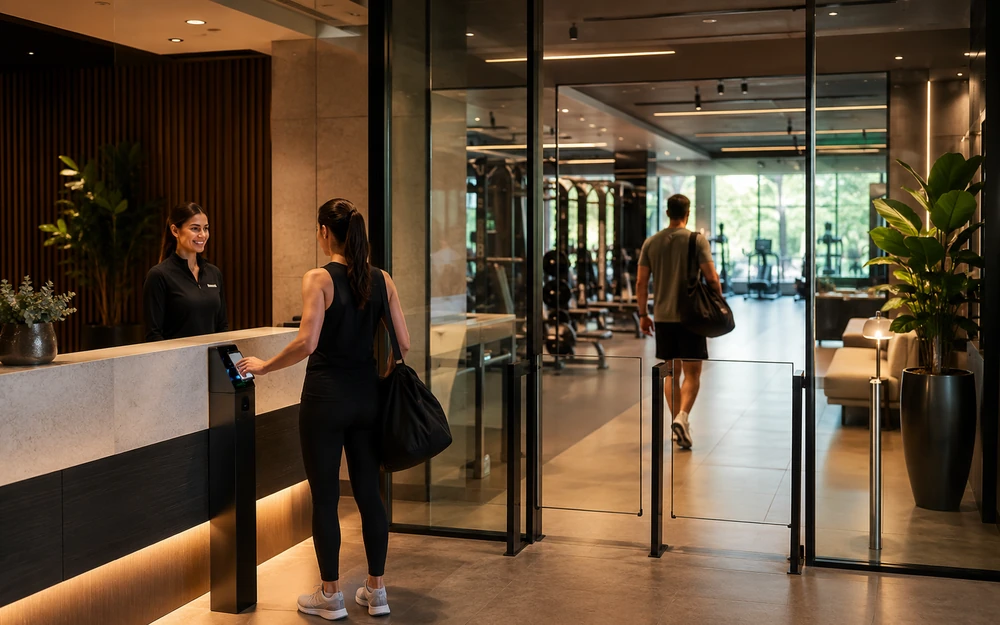
The First Five Minutes Inside a Gym Matter

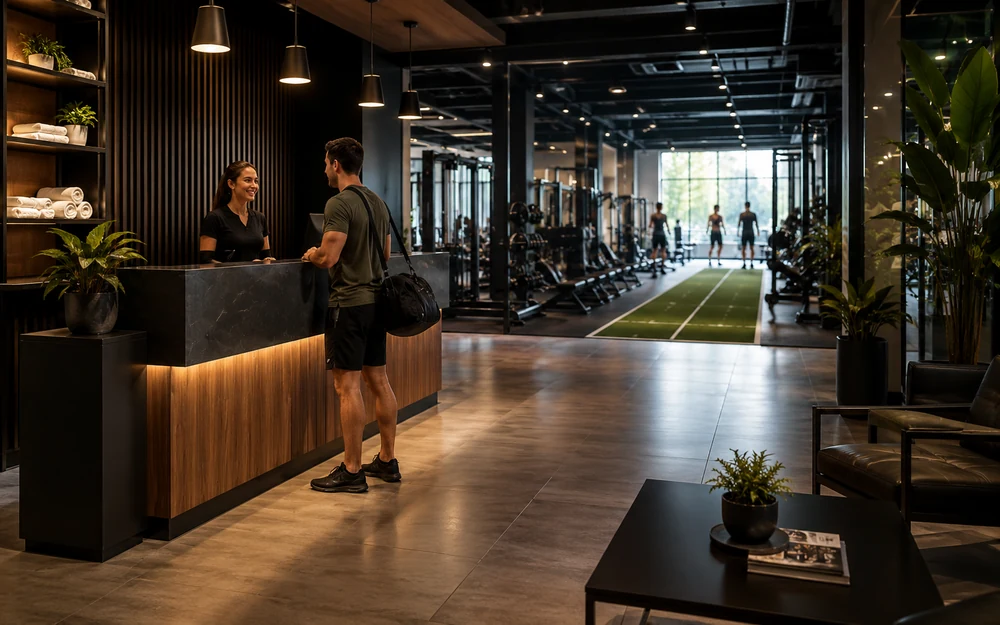
The first five minutes inside a gym matter more than many owners realize.
A gym first impression begins before a customer tries a machine, asks about pricing, or signs up for a membership. They already feel something. The gym either feels clean, organized, and welcoming — or it does not.
In gym operations, first impressions are not only about design. They show how well the gym is managed.
A customer may not know the maintenance budget, the cleaning schedule, the staffing plan, or the cost of equipment repairs. But they can feel the result almost immediately.
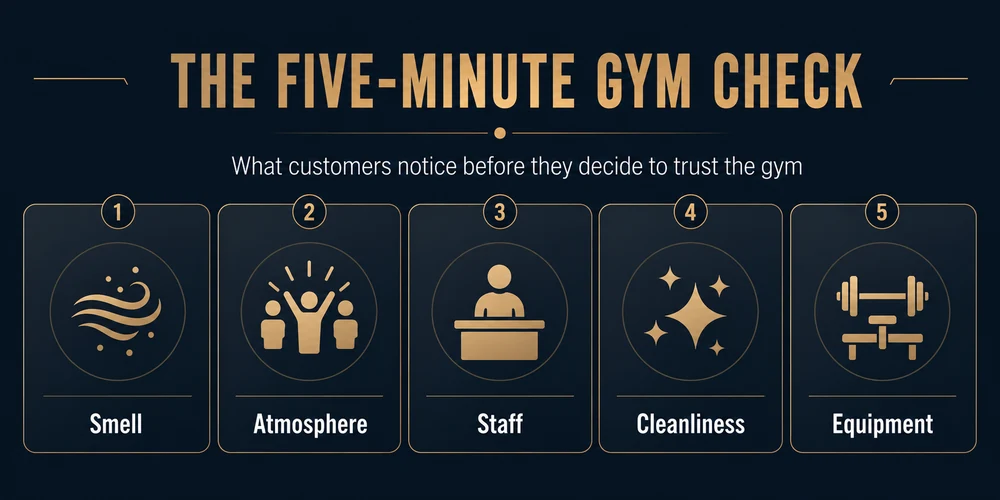
- They notice the smell.
- They notice the atmosphere.
- They notice the staff.
- They notice the cleanliness.
- They notice the equipment.
Together, these details tell a story.
In those first few minutes, many customers are already creating a mental rating of the gym. They may not think about it formally, but they are judging the space quickly: Does it feel clean? Does it feel safe? Does it feel organized? Does it feel worth the price?
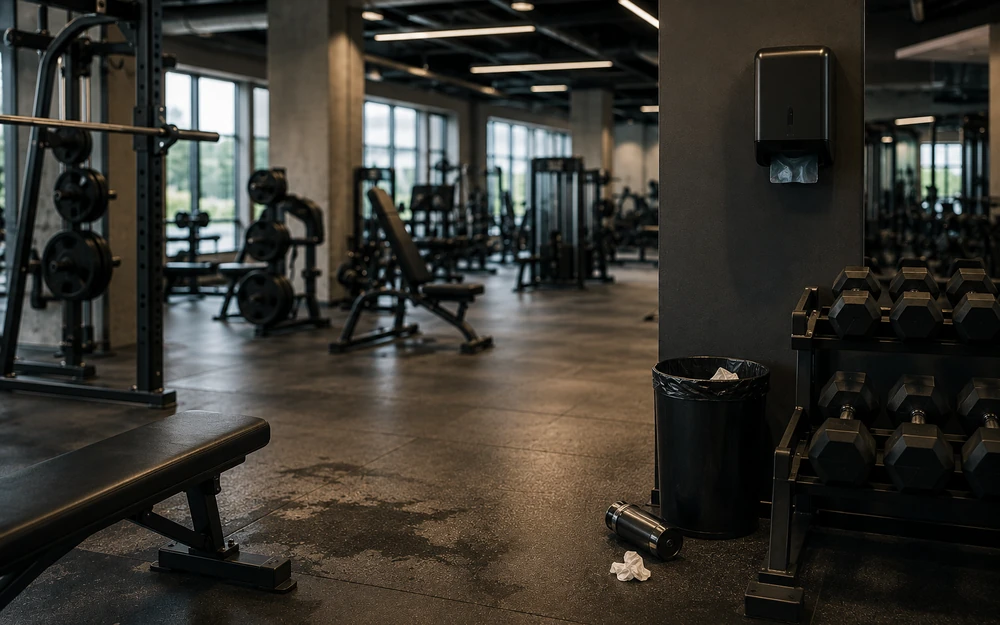
A bad smell, a messy floor, distracted staff, dirty locker rooms, or damaged equipment can immediately lower that internal rating. One problem may not always lose the customer by itself, but it creates doubt. And doubt is dangerous before the sale happens.
After a full workout, the customer may judge the gym by a longer list of things: equipment variety, crowding, music, locker rooms, class quality, pricing, and overall convenience. But the first five minutes create the first score in the customer’s mind.
That early score can influence everything that happens next — whether the customer asks about membership, compares the gym to another facility, or quietly decides to leave.
A Gym’s Smell Says a Lot
Smell is often the first thing people notice when they walk into a gym.
A gym does not need to smell like perfume. In fact, a strong artificial smell can feel fake or uncomfortable. But the space should feel fresh, clean, and controlled.
A bad smell usually means something is not being managed well.
It can point to problems with ventilation, dirty towels, locker rooms, showers, trash, humidity, or cleaning routines. Sometimes the issue is not one big problem. It is many small things being missed every day.
Customers may not know exactly what is wrong. But they feel it.
If the first impression is a bad smell, the customer starts questioning the whole facility.
Atmosphere Matters More Than Noise
A busy gym is not automatically a bad gym.
Some of the best gyms are busy. Energy can be a good thing. It can show that people like the place and want to train there.
The real problem is not always the number of people. The real problem is chaos.
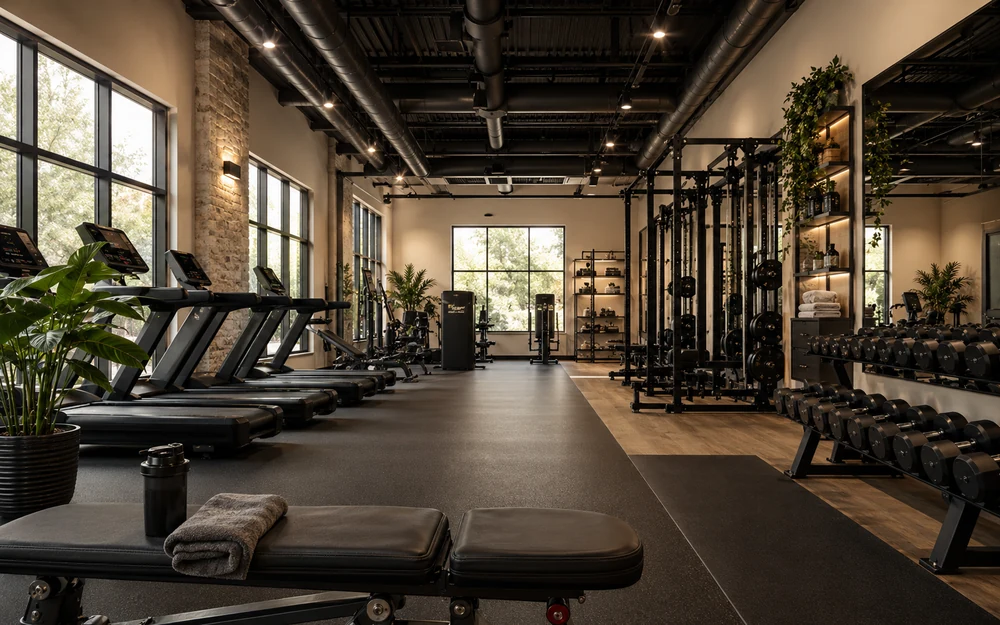
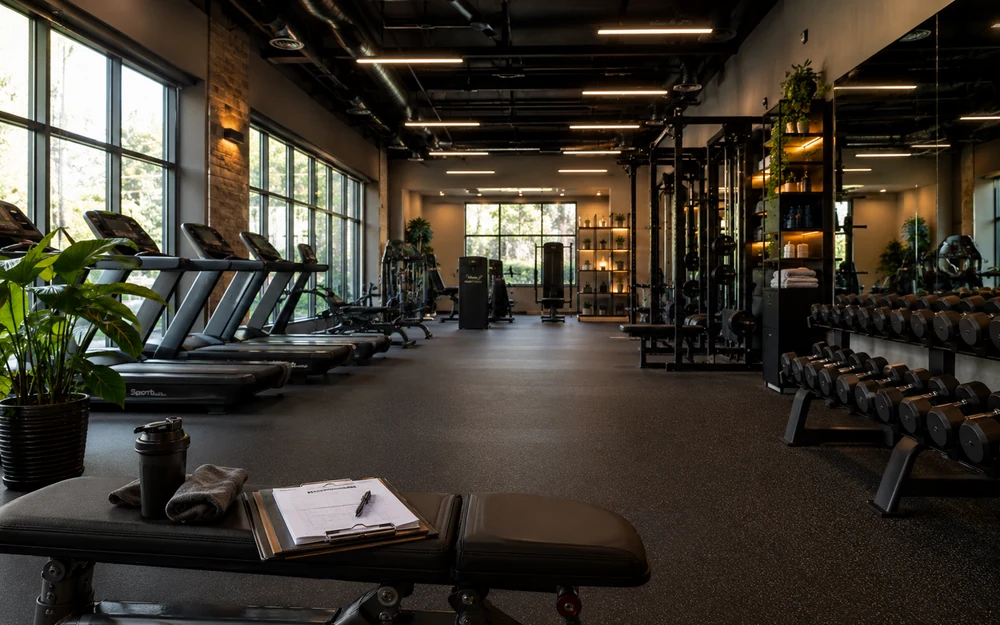
A gym can be full but still feel organized. People move well through the space. Equipment is easy to understand. The floor is clean. Weights are not left everywhere. Staff members are present. The space feels under control.
Another gym can be half-empty and still feel messy, neglected, or uncomfortable.
This is an important difference.
Crowding is not only a capacity issue. It becomes a management issue when the gym feels unmanaged.
Staff Set the Tone
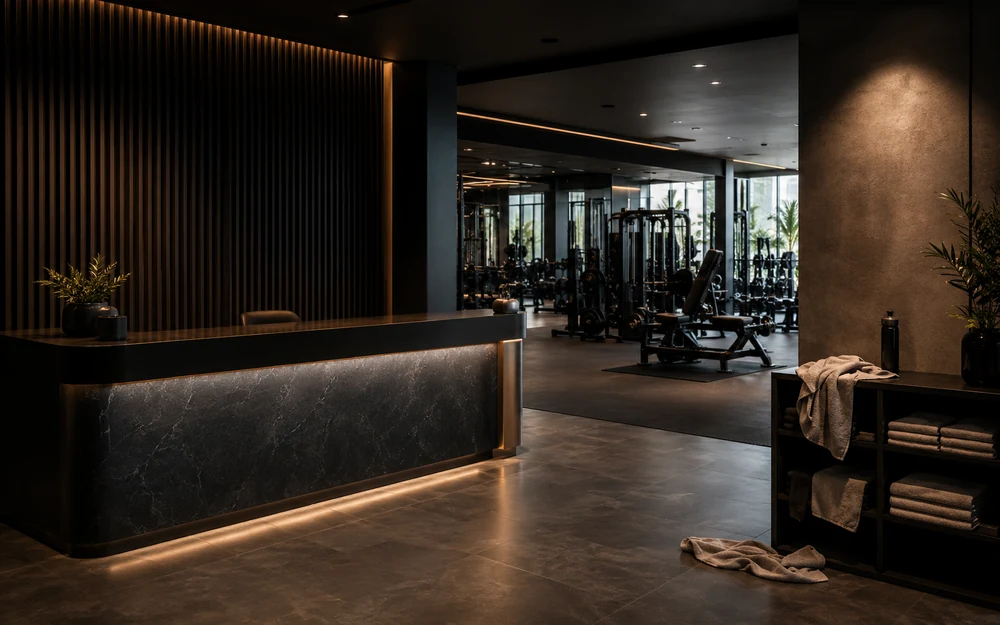
The front desk is one of the most important parts of the customer experience.
The person at the front desk is not just checking people in. They are setting the tone for the entire business.
A simple greeting matters. Eye contact matters. A helpful attitude matters. Customers quickly notice whether staff members are present and engaged, or distracted and disconnected.
Friendliness is not only about personality. In a well-run gym, it is part of the operating system.
Staff should know how to welcome people, answer basic questions, handle small problems, and create a sense of comfort. This does not need to feel fake or overly scripted. It just needs to feel professional and human.
This is why staff systems matter. In projects such as Gym Staff Training System, the goal is not only to tell staff what to do once, but to create clearer routines, standards, documentation, and follow-up that support a better daily customer experience.
When staff are warm, confident, and attentive, customers feel safer about the business.
Cleanliness Builds Trust
Cleanliness is one of the easiest things for customers to judge.
They notice the entrance. They notice the floors. They notice the bathrooms. They notice dust around machines. They notice mirrors, trash cans, showers, towels, and locker rooms.
A customer does not see the cleaning checklist. They see the result.
In a gym, cleanliness is not a small detail. It is trust.
People are touching equipment, sitting on benches, using locker rooms, and sometimes showering inside the facility. If the space does not feel clean, customers start to question the standards of the whole business.
This is especially true in locker rooms and shower areas, where cleanliness, comfort, privacy, and maintenance all affect trust. That is why projects like Men’s Shower Room Renewal are not only facility repairs. They are customer-experience projects that influence how people judge the entire gym.
Cleanliness also affects pricing. A gym that wants to look premium cannot ignore basic details. A clean facility supports the value of the membership. A dirty facility makes even good equipment feel less valuable.
Strong gyms do not wait for complaints before fixing cleanliness problems. They manage them daily.
Equipment Is a Visual Promise
Equipment is one of the clearest signs of a gym’s standard.
It does not always need to be brand new. But it should look safe, maintained, and cared for.
Customers notice torn pads, broken handles, loose parts, rust, dust, missing attachments, and “out of order” signs. They may not understand the repair cost, but they understand neglect.
Equipment sends a message.
If the machines look clean and organized, the gym feels more professional. If the equipment looks old, damaged, or ignored, customers may question the safety and quality of the entire facility.
This is why equipment decisions are not only purchasing decisions. In projects such as Gym Equipment Modernization, replacing outdated and repair-heavy equipment supports safety, customer perception, premium positioning, and long-term operational performance.
Equipment is not just a fitness tool. It is part of the customer’s first impression.
For many customers, it also helps answer one simple question:
The First Five Minutes Reveal the Business
The first five minutes inside a gym do not show everything. But they show enough.
- They show whether the gym feels clean.
- They show whether the space feels controlled.
- They show whether the staff are present.
- They show whether equipment is cared for.
- They show whether the customer can trust the environment.
This is why small details matter so much in gym operations.
A strong gym does not only focus on sales. It manages the experience before the sale happens.
By the time a customer asks about membership, they have already started deciding whether the gym feels right.
The first five minutes can either build trust or create doubt.
And in a competitive fitness market, that difference matters.
What Do Customers Notice First?
Make the First Five Minutes Reflect a Better Operation
If the gym looks active but the customer experience feels inconsistent, I can help identify the operational gaps and build a practical path toward stronger daily standards.
No pressure. The first conversation is used to understand the situation and determine whether there is a practical fit.