Gym Member Experience Starts Before the Workout


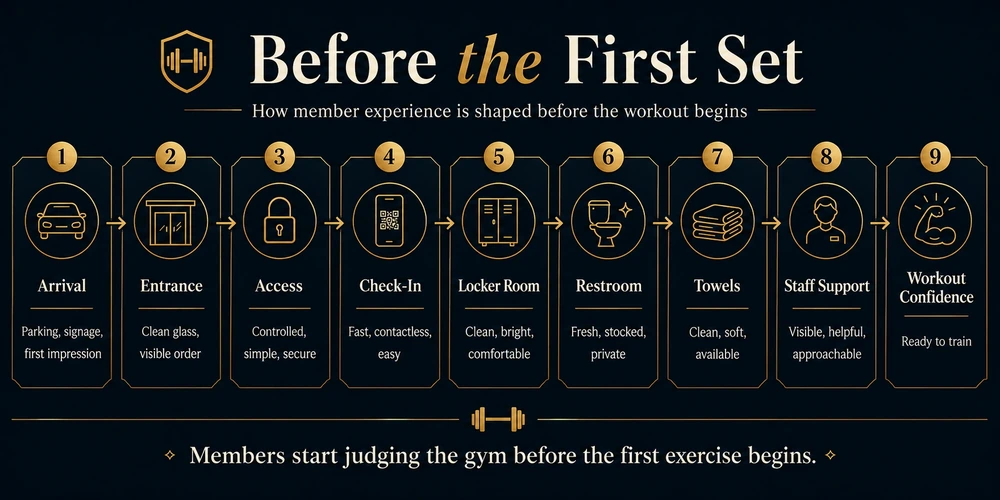
A member does not begin judging a gym when the first exercise starts. The judgment begins earlier — at arrival, at the entrance, during check-in, inside the locker room, in the restroom, and in every small moment before the workout actually begins.
The workout may be the main reason someone comes to a gym, but it is not the first part of the experience. Before a member touches a machine, picks up a dumbbell, or starts warming up, they have already formed an opinion about the facility.
That opinion is shaped by practical details: whether the entrance looks clean, whether access feels simple and controlled, whether check-in is fast, whether the locker room feels comfortable, whether the restroom is maintained, whether towels are available, and whether staff are easy to approach.
These details may seem small individually. Together, they tell the member whether the gym is organized, safe, premium, and worth trusting.
The Workout Is Not the First Touchpoint
Many gyms think about member experience mainly inside the training area. Equipment, layout, programming, personal training, and workout atmosphere are all important. But gym member experience starts before any of that.
A member may arrive already rushed, tired, distracted, or uncertain. The gym can either reduce that friction or add to it. A confusing entrance, slow check-in, dirty glass, poor signage, or uncomfortable locker room can affect the emotional state the member brings into the workout.
This matters because the pre-workout experience sets the tone. If the first few minutes feel smooth, clean, and controlled, the member is more likely to feel ready. If the first few minutes feel neglected or frustrating, the workout begins with tension instead of confidence.
For a premium gym, this becomes even more important. A premium promise is not judged only by equipment quality. It is judged by the entire sequence of small moments that happen before the workout begins.
This connects directly with the idea in The First Five Minutes Inside a Gym Matter: members begin judging the facility before the actual training experience starts.
The Entrance Sets the Standard
The entrance is one of the first physical signals of operational quality. It tells the member whether the facility is being watched, cleaned, and managed.
If the gym has glass doors, glass walls, or a visible front entry, cleanliness becomes especially important. Fingerprints, dust, stains, smudges, and clutter are noticed immediately. The member may not consciously analyze every mark, but the impression is instant.
A dirty entrance can create doubt before the member even checks in. If the first visible surface looks neglected, the member may begin questioning the rest of the facility. That is not only a cleaning issue. It is a trust issue.
The entrance should feel intentional. It should be clear where to go, how to enter, where to check in, and what the first step is. The member should not need to pause and guess how the system works.
A good entrance does not need to be dramatic. It needs to be clean, obvious, and aligned with the type of gym being operated.
Access Should Feel Controlled, Not Complicated
Access control is part of member experience. It affects safety, privacy, traffic flow, staffing, and the overall feeling of control inside the facility.
The right entrance system depends on the business model. A high-volume gym may need entry and exit to be extremely fast and simple because delays can quickly create frustration. A smaller premium gym may need stronger access control because members expect privacy, security, and a more controlled environment.
In many premium gyms, some form of controlled access is expected. It helps protect the space, supports member trust, and reduces the feeling that anyone can simply walk in without accountability.
But access control should not create unnecessary friction. If the system is slow, confusing, unreliable, or poorly placed, it can hurt the experience it is supposed to protect.
The goal is balance. Good access control should make the gym feel secure without making the member feel blocked, delayed, or confused.
Operational point: Access should create confidence, not bottlenecks. The system must match traffic volume, staffing level, layout, and member expectations.
Check-In Should Be Fast and Frictionless
Check-in is one of the most common friction points in a gym. It happens every visit, so even a small inconvenience can become annoying over time.
Ideally, check-in should be fast, simple, and close to the natural entry path. The member should be able to check in immediately after entering the gym, without needing to walk around, wait for unclear instructions, or depend entirely on a staff member being available.
Contactless check-in is often preferable because it reduces friction. A member should be able to scan, tap, or confirm access quickly and continue into the facility. Staff should still be present and available, but the basic check-in process should not feel slow or manual unless there is a specific reason for it.
The best check-in process is almost invisible. It confirms access, supports control, and keeps the member moving.
This is especially important during busy hours. If members arrive before work, during lunch, or after a long day, they do not want the gym experience to begin with a line at the front desk.
Locker Rooms Shape Comfort and Trust
The locker room is one of the most sensitive areas in the member journey. It is not just a utility space. It directly affects comfort, privacy, security, and trust.
Members enter the locker room with personal belongings. They change clothes there. They may be physically exposed. They may be preparing for work, returning to work, or trying to reset after a stressful day. The environment needs to support that vulnerability.
A locker room should be clean, well-lit, dry, and easy to use. It should not feel dark, neglected, or uncomfortable. Poor lighting can make the space feel unsafe or outdated. Wet floors create both safety and cleanliness concerns. Broken lockers, cluttered benches, unpleasant smells, or overflowing trash send the wrong signal immediately.
Privacy also matters. A locker room layout should not make members feel unnecessarily exposed. Even when the space is simple, it should feel considered.
For many members, the locker room is where the gym either earns trust or loses it. A beautiful training floor cannot fully compensate for a locker room that feels dirty, insecure, or poorly managed.
Restrooms Are Part of the Brand Experience
Restrooms are often treated as secondary spaces, but members do not experience them that way. A restroom is part of the brand experience because it reflects the gym’s real operating standards.
A clean restroom supports confidence. A poorly maintained restroom creates doubt. Odor, empty supplies, dirty surfaces, weak ventilation, overflowing bins, and poor lighting all affect how members judge the business.
Acoustic privacy also matters. Members should not feel exposed or uncomfortable because every sound carries through the space. Background music or sound masking can help make the environment feel more comfortable, but it cannot replace proper cleaning, ventilation, and maintenance.
This is especially true in a premium gym. Premium does not only mean better equipment or better finishes. It means the private, less visible areas of the facility are also maintained with care.
A restroom can quietly support the premium promise, or it can quietly damage it.
Towel Service Must Match the Premium Promise
If a gym positions itself as premium, towel service becomes more than an amenity. It becomes part of the member expectation.
Towels should be clean, fresh, soft, and available when members need them. Shortages create frustration. Rough or worn towels weaken the premium feeling. Disorganized towel return areas can make the facility look messy even when the rest of the gym is clean.
Towel service also creates operational pressure. Someone has to manage inventory, laundry flow, folding, restocking, collection, and replacement. If the system is weak, members feel the failure quickly.
This is why towel service should not be treated casually. If the gym offers it, the service needs to be consistent. A premium detail becomes a negative signal when it is poorly executed.
Member experience rule: If an amenity is part of the premium promise, inconsistency can hurt perception more than not offering the amenity at all.
Staff Should Reduce Uncertainty
Staff presence is not only about sales, cleaning, or front desk coverage. Staff also reduce uncertainty.
A member should feel comfortable asking where something is, how to find a specific attachment, or who can help with a basic facility question. Asking for help should not feel like an interruption or an embarrassment.
This matters especially with smaller equipment and accessories. Members may need resistance bands, foam rollers, stretching mats, cable attachments, ankle straps, barbell collars, jump ropes, medicine balls, lifting belts, or specialty handles. If these items are difficult to find, disorganized, or scattered around the facility, the member loses time and confidence.
Good staff support does not mean hovering over every member. It means being visible, approachable, and informed. Staff should know where things are. They should notice confusion. They should be able to guide a member without making the interaction feel heavy.
Projects such as Gym Staff Training System matter because staff routines, documentation, and expectations help turn daily support into a repeatable operating standard.
Members should not feel lost inside a gym they are paying to use.
New Members Need a Clear Path to Confidence
The pre-workout experience is even more important for new members.
A new member may not know where to check in, where to change, where towels are located, how lockers work, which equipment is available, or who to ask for help. They may also feel uncomfortable admitting that they do not know how to use a machine or perform an exercise safely.
This is where orientation becomes valuable. A simple equipment introduction or an easy way to book time with a trainer can reduce anxiety and help the member feel more confident.
The process should be easy to understand. A new member should not have to search through unclear instructions, wait for a sales pitch, or pretend they already know how everything works. If they need help, the path should be obvious.
Early confidence supports retention. When a member feels supported at the beginning, they are more likely to return. When they feel lost, exposed, or embarrassed, the relationship can weaken before a routine is ever built.
Small Details Decide How the Workout Begins
By the time the member reaches the training floor, the workout has already been shaped by everything that happened before it.
A clean entrance, smooth access, fast check-in, clear signage, comfortable locker room, maintained restroom, fresh towels, organized small equipment, and approachable staff all help the member begin the workout with confidence.
When these details are weak, the workout starts with friction. The member may feel rushed, irritated, uncomfortable, or unsupported. Even if the equipment is good, the overall experience has already been affected.
This is why member experience should not be limited to the workout itself. The pre-workout journey is part of the product. It is part of what the member is paying for.
Member Experience Begins With Operational Control
A strong gym experience does not begin at the first machine. It begins with the systems, spaces, people, and small details that prepare the member to feel comfortable, confident, and ready to train.
This is why pre-workout experience is an operational issue, not only a design issue. Clean glass, controlled access, fast check-in, clean locker rooms, maintained restrooms, reliable towel service, visible staff, and simple orientation all require systems behind them.
When those systems work, the member may not notice every detail. They simply feel that the gym is easy to use, well managed, and worth returning to.
When those systems do not work, the result becomes visible through service gaps, friction, and weaker trust. That is why the problem connects with Why Service Gaps Hurt Gym Member Retention.
Gym member experience is not protected by design alone. It is protected by daily operational control.
When the pre-workout experience is clean, simple, and controlled, the workout begins with trust instead of friction.
Is Friction Starting Before the Workout?
Make the Pre-Workout Journey Part of the Member-Experience Advantage
If access, check-in, locker rooms, towels, staff support, or orientation feel inconsistent, I can help identify the operational gaps and build a practical system that protects trust from the moment members arrive.
No pressure. The first conversation is used to understand the situation and determine whether there is a practical fit.