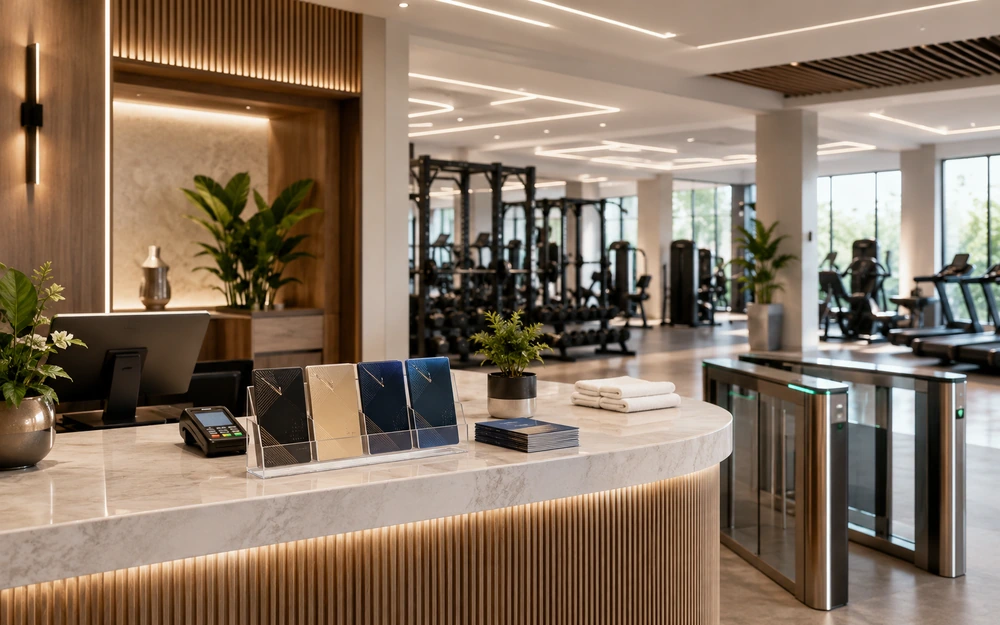
Retail ControlUpgrade.
A gym retail control system that turned untracked front-desk product sales into a measurable revenue stream through POS cleanup, barcode scanning, inventory accountability, supplier review, staff product training, and faster checkout.
Turning an untracked retail area into a controlled, measurable, and profitable revenue stream.
The gym’s retail area sold drinks, protein bars, and other front-desk products, but the existing process did not provide reliable visibility or control. Many transactions were entered as custom items in the POS, making it difficult to identify what was sold, which products were performing, what needed to be reordered, and whether the category was actually profitable.
The project introduced a structured gym retail control system. Products were properly configured in the POS, barcode scanning was added, inventory was compared against sales, storage pickup sheets were introduced, supplier pricing was reviewed, and front-desk staff were trained to explain product options more confidently and consistently.
The retail area was generating sales, but the business lacked clear control over what was sold, lost, or reordered.
Drinks, protein bars, and other retail products were available at the front desk, but the sales process did not provide reliable product-level visibility. Many transactions were entered as custom items in the POS, making it difficult to identify which products were selling, how individual items were performing, and whether the retail category was profitable.
The absence of barcode scanning also slowed checkout. Staff had to search for products manually in the POS, creating delays, inconsistent entries, and a greater risk of transaction errors during busy front-desk periods.
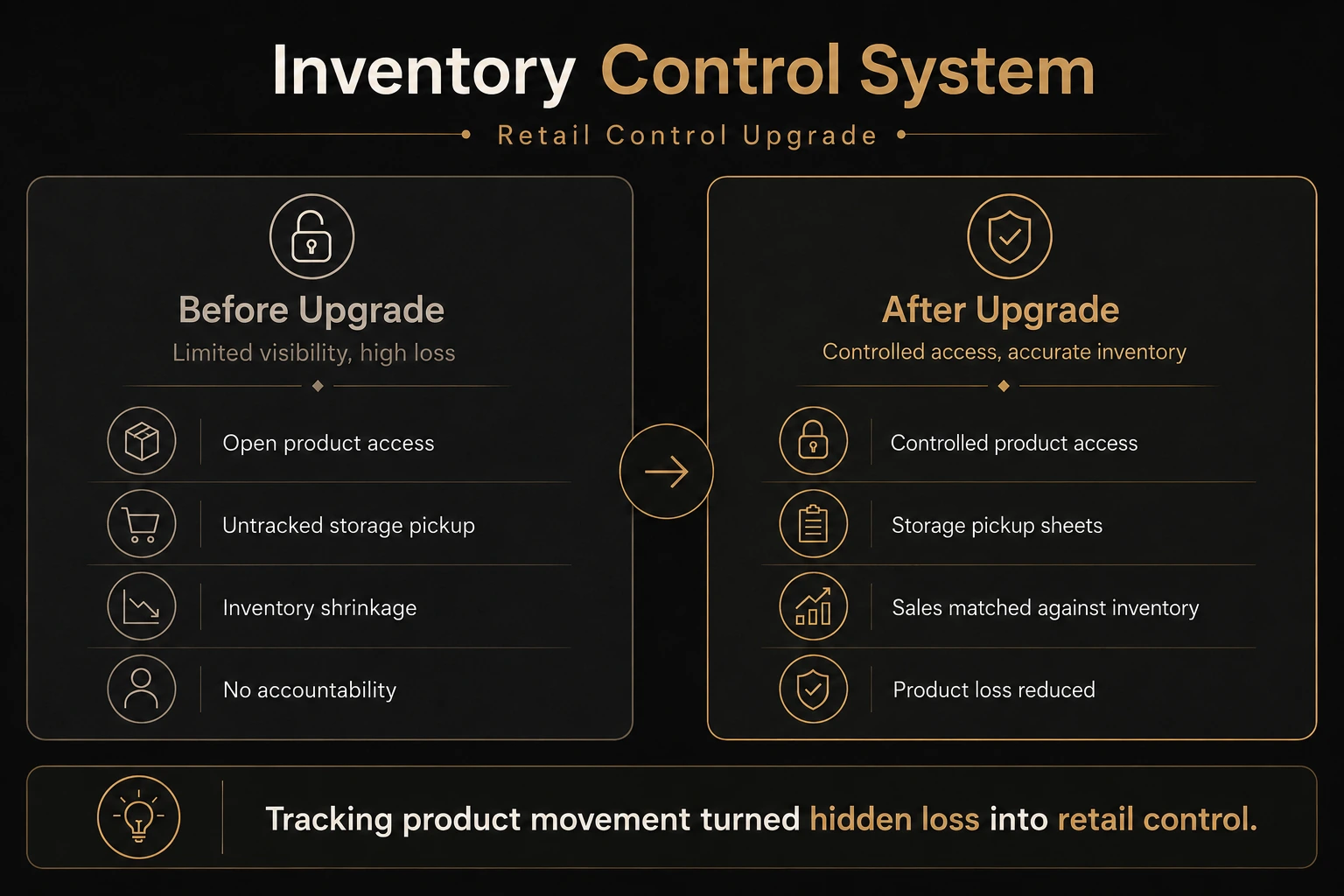
Inventory movement was not consistently controlled. Products could be taken from storage without a reliable tracking process, making it difficult to compare inventory against sales, identify product loss, and reorder popular items before they ran out.
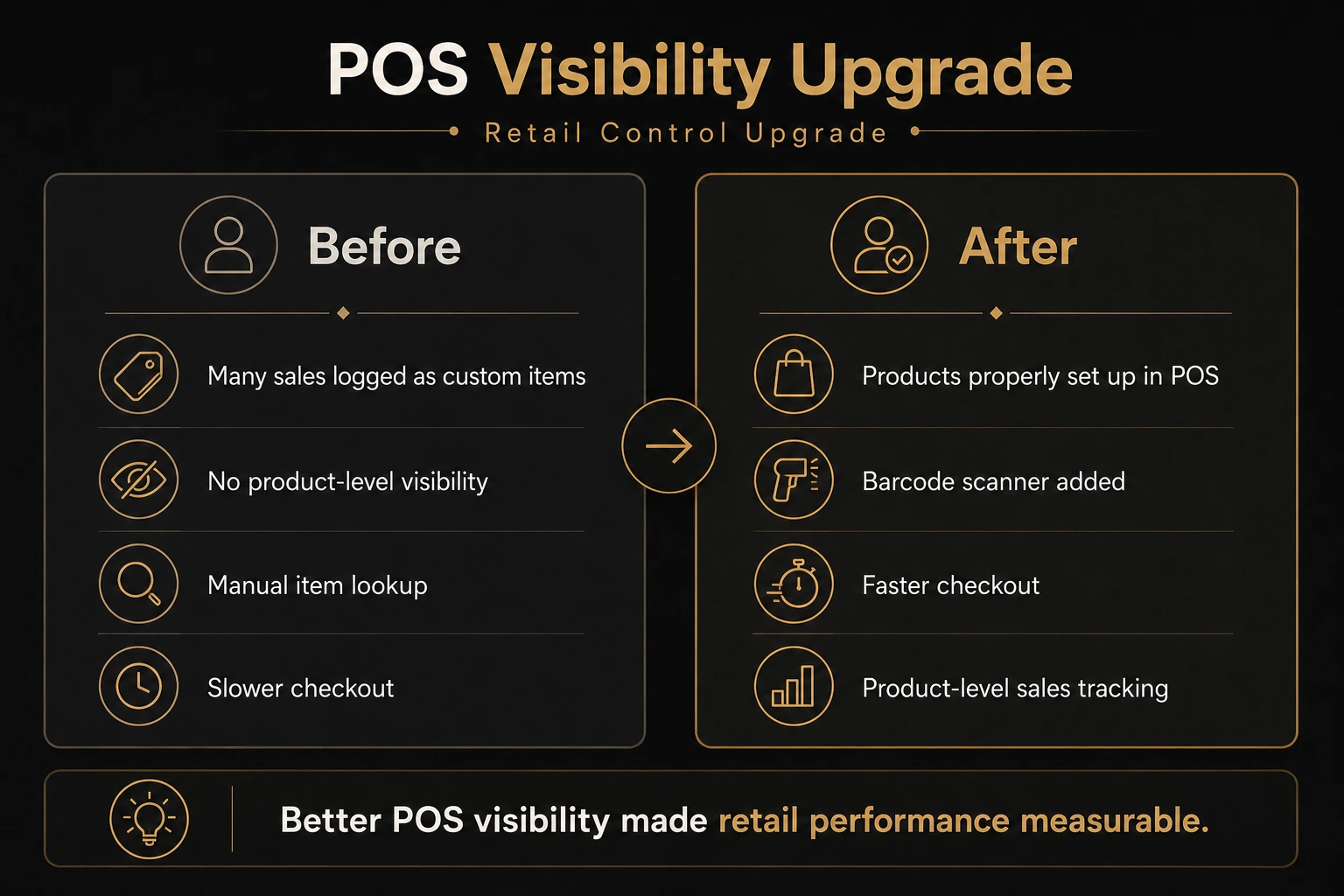
Many products were sold as custom items, making it difficult to identify what was selling, which items were profitable, and where corrective action was needed.
Without barcode scanning, front-desk staff had to search for products manually, slowing transactions and increasing the likelihood of entry errors.
Products taken from storage were not consistently recorded, creating gaps between what was purchased, what was sold, and what remained in stock.
Limited low-stock visibility meant popular products could remain unavailable for days or weeks while replacement inventory was still in transit.
A structured retail control system was built around POS accuracy, barcode scanning, inventory accountability, supplier review, and staff product knowledge.
POS product setup standardized
Products were properly organized in the POS so sales could be tracked by individual item instead of being entered as generic custom transactions. This created clearer visibility into product performance, sell-through, and reorder needs.
Barcode scanning added
A barcode scanner was introduced to speed up checkout, reduce manual search errors, and help front-desk staff process product sales more consistently during busy periods.
Inventory tracking introduced
Inventory tracking was activated in the POS, storage pickup sheets were created, and product movement was compared against sales to reduce untracked product loss and improve accountability.
Retail performance strengthened
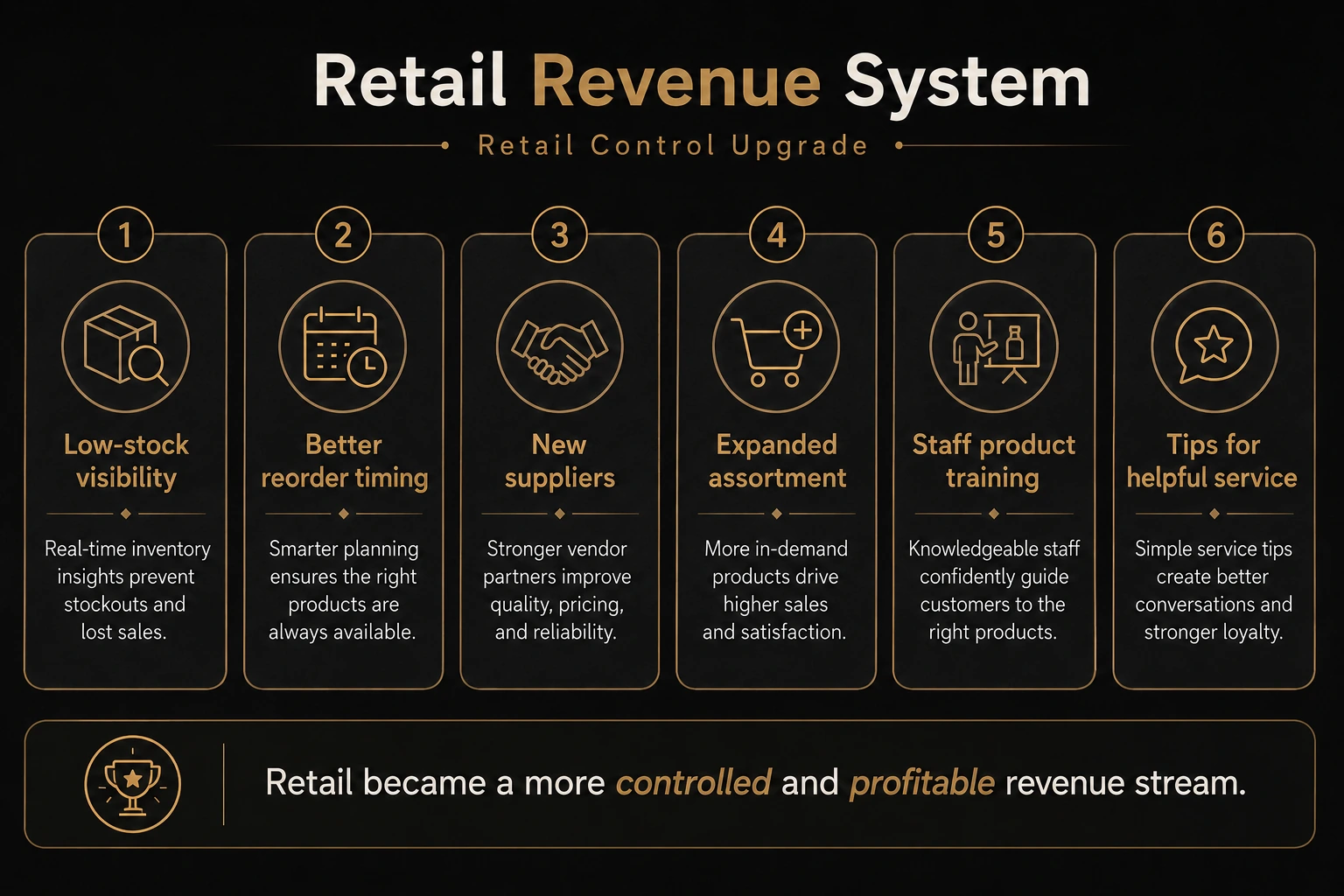
Supplier pricing was reviewed, alternative vendors were considered, the product assortment was expanded, staff were trained on product details, and tipping was enabled so customers could reward helpful service.
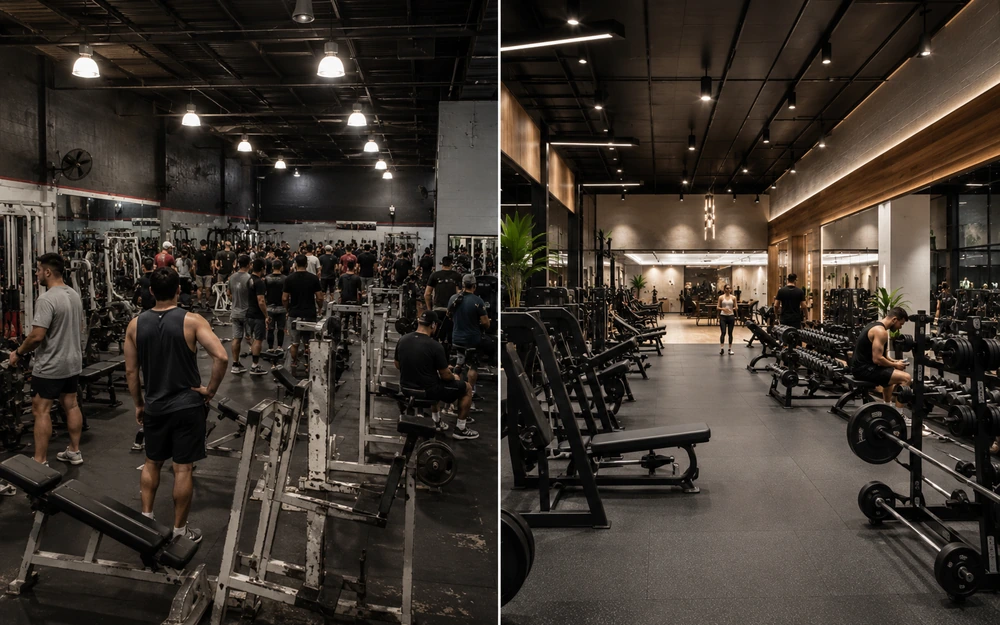
Visualizing how the retail area was transformed from an untracked side operation into a controlled revenue system.
Because this project focused on systems, controls, and product-level visibility, the gallery uses case-study visuals to show the key operational changes: POS standardization, barcode scanning, inventory accountability, storage tracking, supplier review, and staff-supported product sales.
-
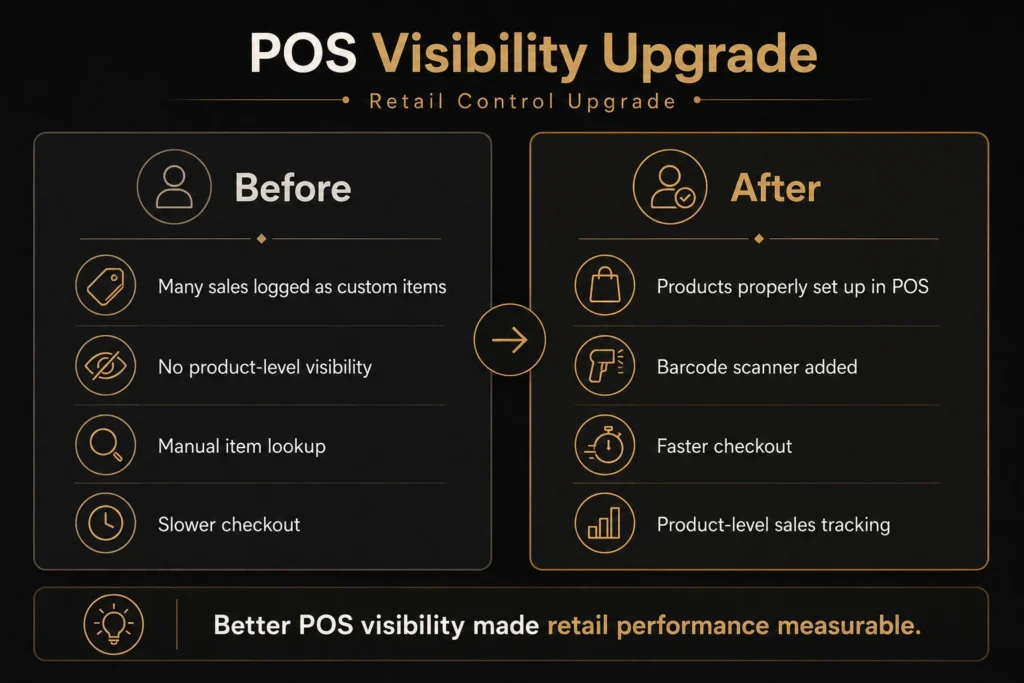
- Gallery image showing how POS cleanup improved product-level sales visibility, barcode scanning, and checkout speed.
-
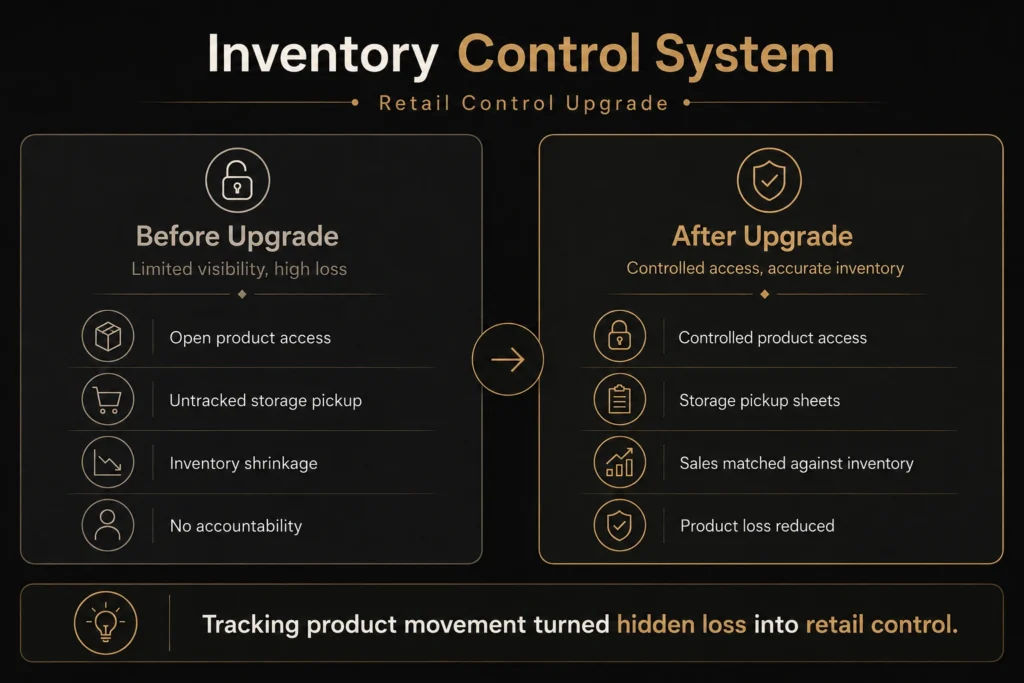
- Gallery image showing how storage tracking, controlled product access, and sales-to-inventory comparison reduced hidden product loss.
-
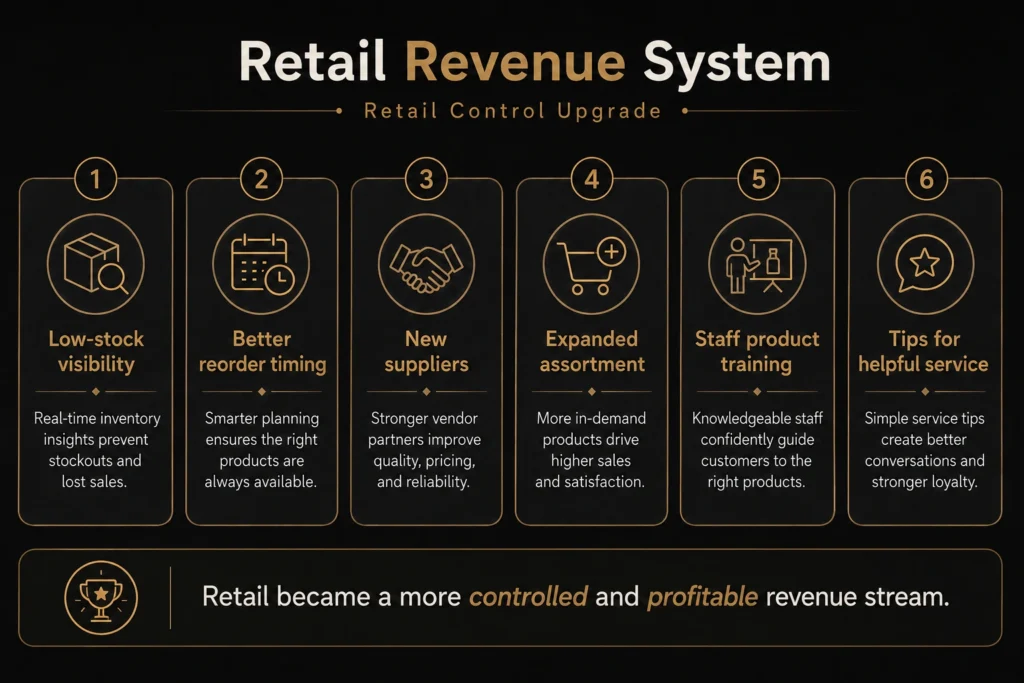
- Gallery image showing how inventory visibility, supplier review, assortment planning, staff training, and tips helped turn retail into a controlled revenue stream.
The retail area became easier to control, faster to operate, and more reliable as a revenue channel.
The project improved operational control and retail execution. What had previously functioned as a loosely managed side operation became a structured system with better POS visibility, inventory accountability, reorder discipline, and staff-supported product sales.
Untracked product movement was reduced
By restricting open access, recording storage pickups, and comparing inventory against sales, the gym strengthened product accountability and reduced opportunities for unexplained inventory loss.
Checkout and tracking improved
Barcode scanning reduced manual product searches, helped front-desk staff process transactions more consistently, and made product-level sales tracking easier to manage.
Retail became a managed revenue stream
With better supplier review, a stronger product assortment, inventory visibility, reorder tracking, and improved staff product knowledge, the retail area became a more measurable and professionally managed business category.
Need to turn your gym retail area into a controlled revenue stream?
Retail can quietly lose money when products are not tracked, sales are entered incorrectly, inventory movement is not controlled, and staff lack the tools to sell efficiently. A structured POS setup, barcode scanning, inventory accountability, supplier review, and staff product training can turn a small front-desk category into a measurable and professionally managed revenue system.
No pressure — the first conversation is simply to understand the current retail operation and determine whether a focused systems review or implementation project would be a practical next step.