Membership RevenueOptimization.
A value-first pricing strategy that supported phased increases in recurring membership rates, new access products, updated trainer revenue policies, and stronger monthly revenue after the gym experience was upgraded.
Improving membership revenue by upgrading the gym experience first, then adjusting pricing in a controlled and explainable way.
The gym needed a more sustainable revenue model to support stronger management, better service quality, improved facilities, and continued operational upgrades. Raising prices before improving the member experience, however, would have been difficult to justify and could have created unnecessary resistance.
The project followed a value-first strategy. The gym experience was improved first through better equipment, cleaner facilities, stronger operations, and a more professional member environment. Recurring membership rates were then increased gradually, new access products were introduced, and trainer access fees were updated through a clearer pricing policy.
The gym needed higher recurring revenue, but pricing could not be increased until the member experience justified it.
The existing membership pricing no longer fully supported the cost of operating the facility at a higher standard. The gym needed stronger management, better service quality, cleaner operations, improved facilities, and continued upgrades, but the old pricing structure limited its ability to fund those improvements sustainably.
At the same time, a simple price increase would have created risk if members did not clearly see the added value. Before recurring membership rates could be adjusted, the gym first needed to become a better product: more professional, better maintained, cleaner, more comfortable, and easier to justify at a higher price point.
Access revenue also needed review beyond monthly memberships. Pass products, independent trainer access fees, and client access tied to private training all needed to better reflect the real cost and value of using the facility.
The existing recurring pricing did not fully support higher operating standards, stronger management, better service, and continued facility improvement.
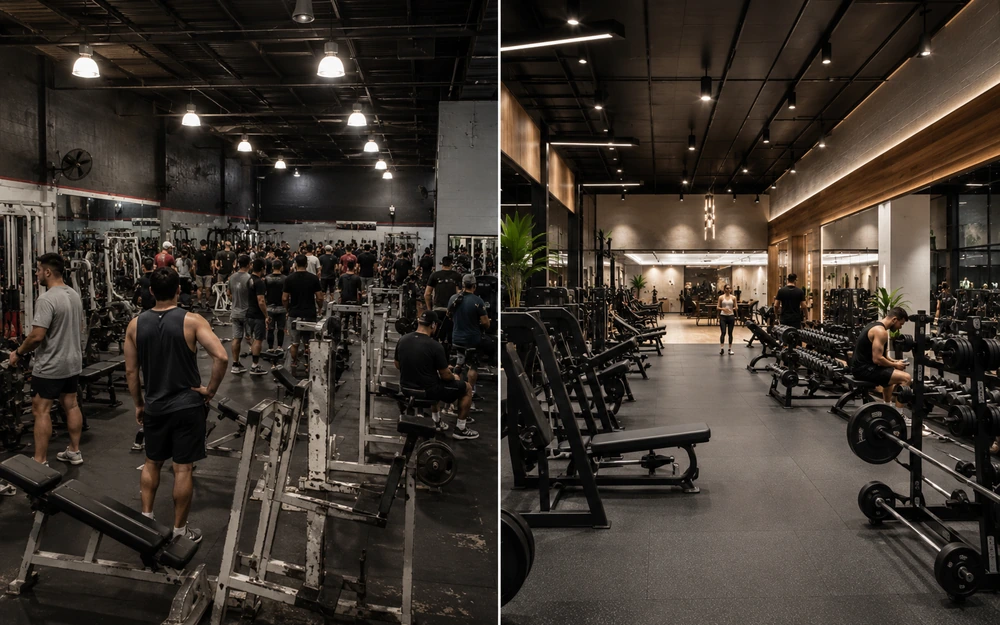
Before the upgrades, raising prices would have been difficult because the member experience had not yet clearly matched the higher value being requested.
The gym needed more flexible access products for customers who were not ready for a recurring membership or only needed short-term access.
Independent trainers used the facility with their clients, but the pricing policy needed to better reflect facility usage, equipment access, cleaning, utilities, and operational support.
A value-first revenue strategy was introduced so pricing increased only after the gym experience, service quality, and operating standards had improved.
Gym value improved first
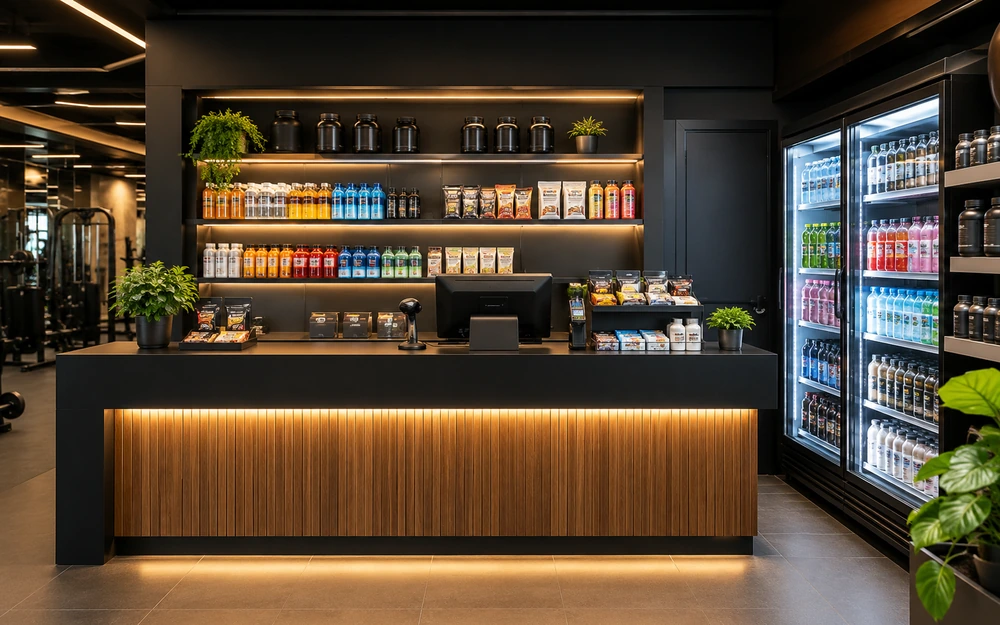
The facility experience was upgraded before any pricing changes were introduced. Equipment, cleanliness, service, management quality, and the overall member environment were improved so the higher price point felt justified.
Membership rates increased gradually
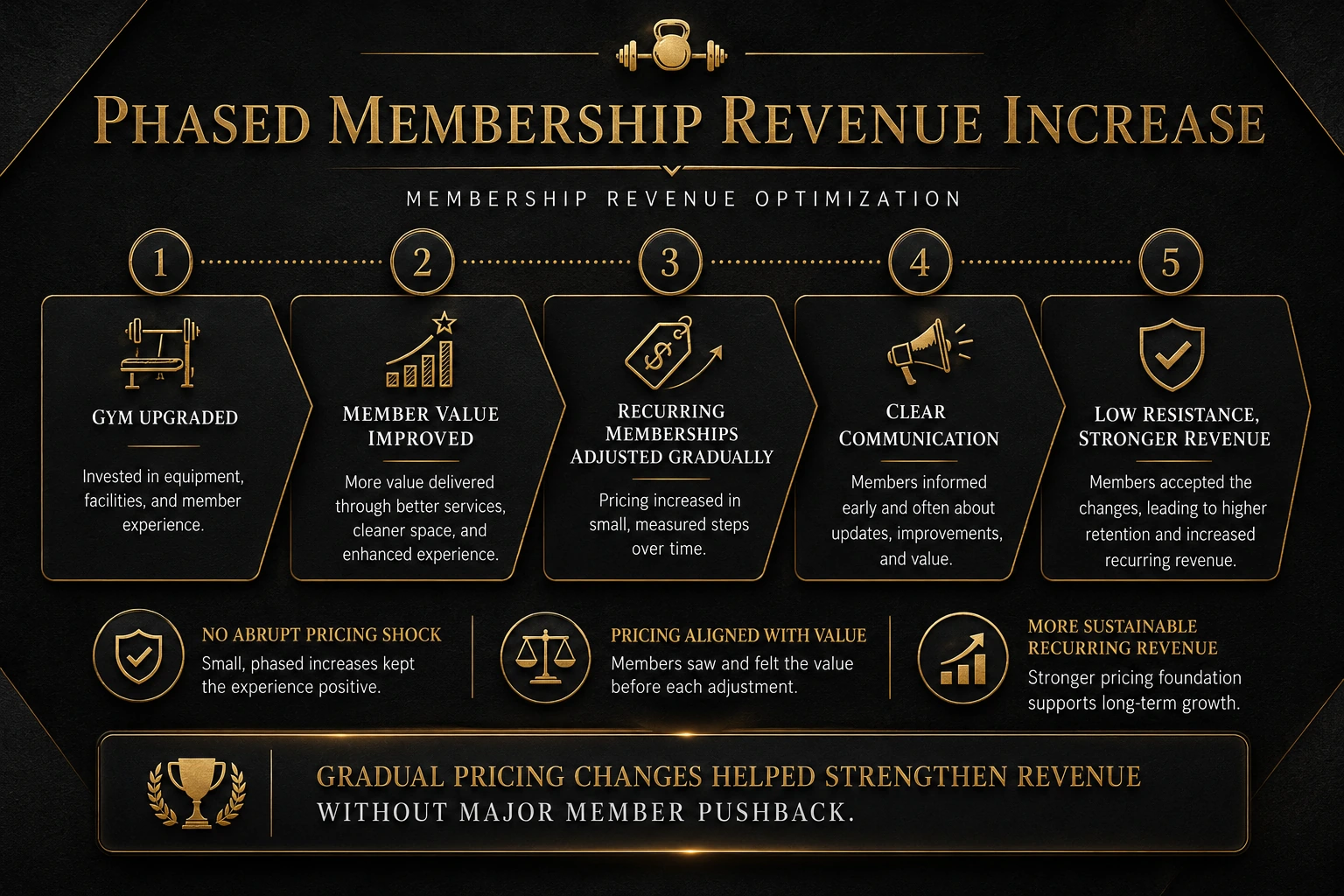
Recurring membership rates were adjusted in phases rather than increased all at once. This helped reduce member resistance and made each change easier to explain and manage.
New access products introduced
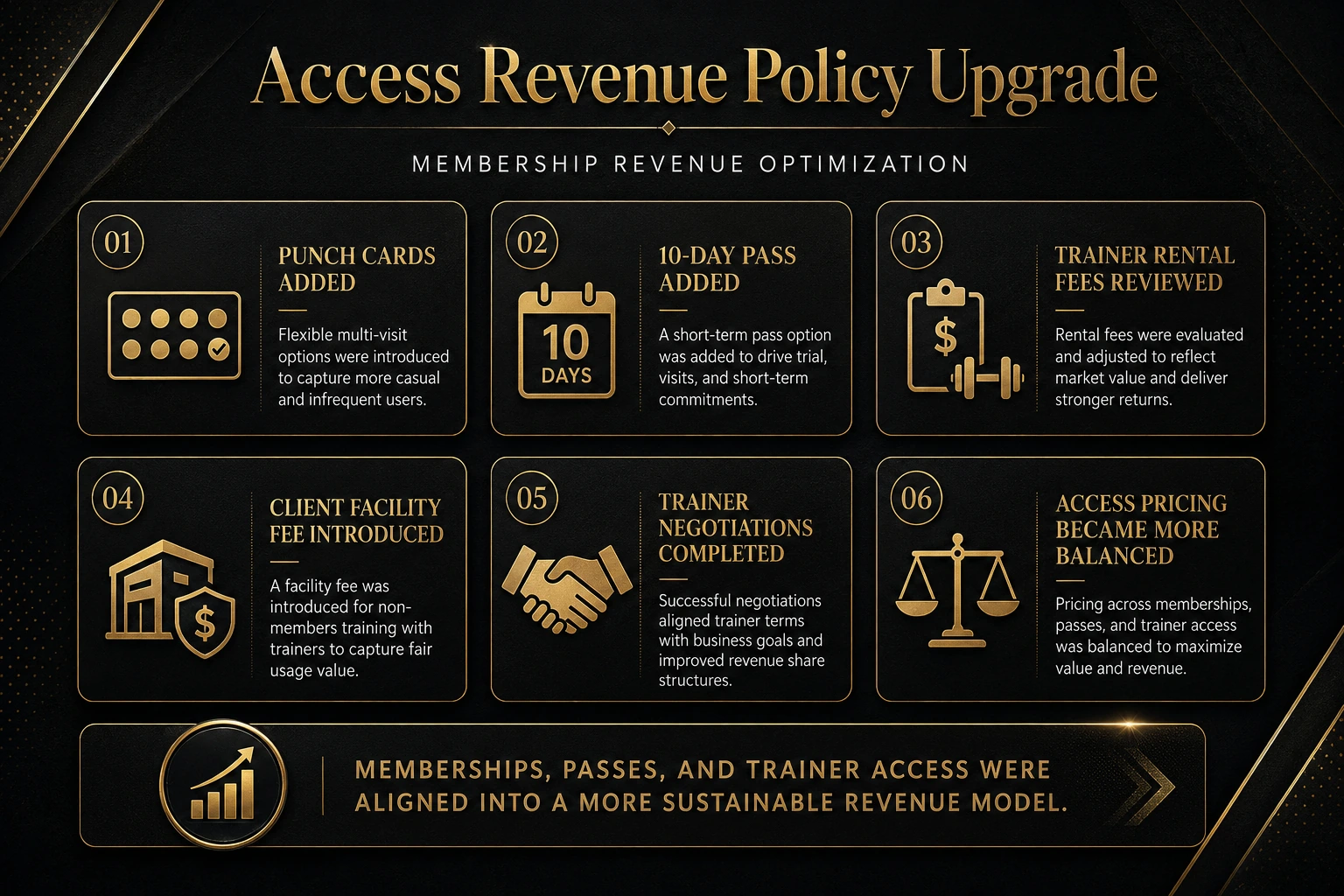
New pass options were added, including punch cards with longer validity periods and short-term products such as a 10-day pass, giving customers more flexible ways to use the gym.
Trainer access pricing updated
Independent trainer access pricing was reviewed, a small facility fee was introduced for trainer clients, and the updated policy was explained through direct conversations with trainers.
Visualizing how pricing was adjusted only after the gym experience became strong enough to support a higher value proposition.
Because this project focused on revenue strategy rather than a physical renovation, the gallery uses case-study visuals to show the key changes: value-first pricing, phased increases in recurring membership rates, new access products, trainer access policy updates, and clearer communication around the revised pricing structure.
-
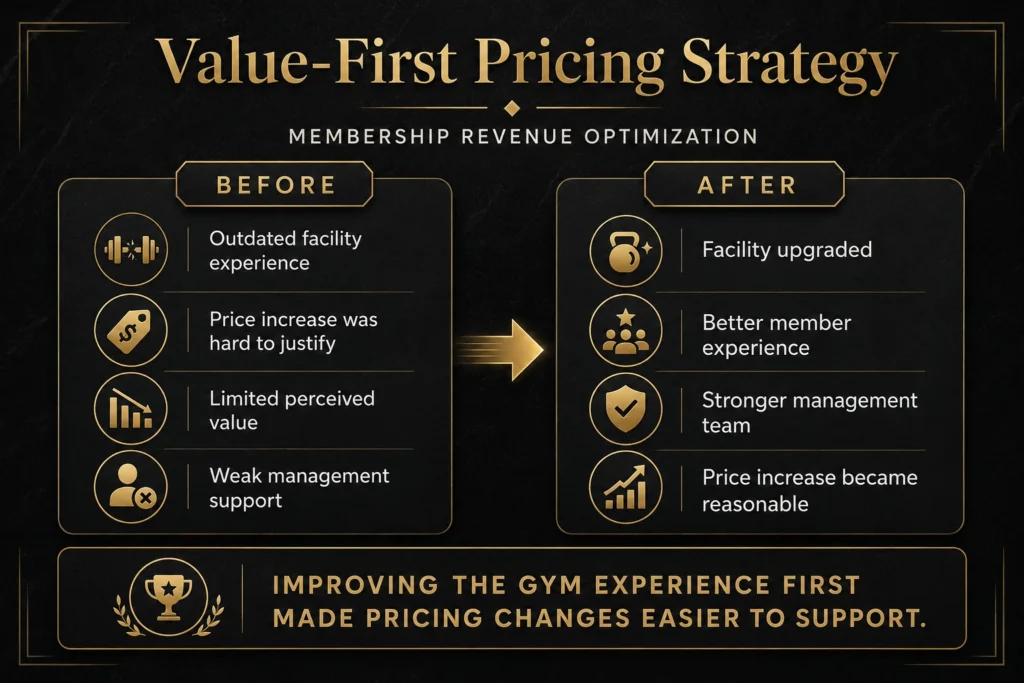
- Gallery image showing how improving the gym experience first made future pricing changes easier to justify and support.
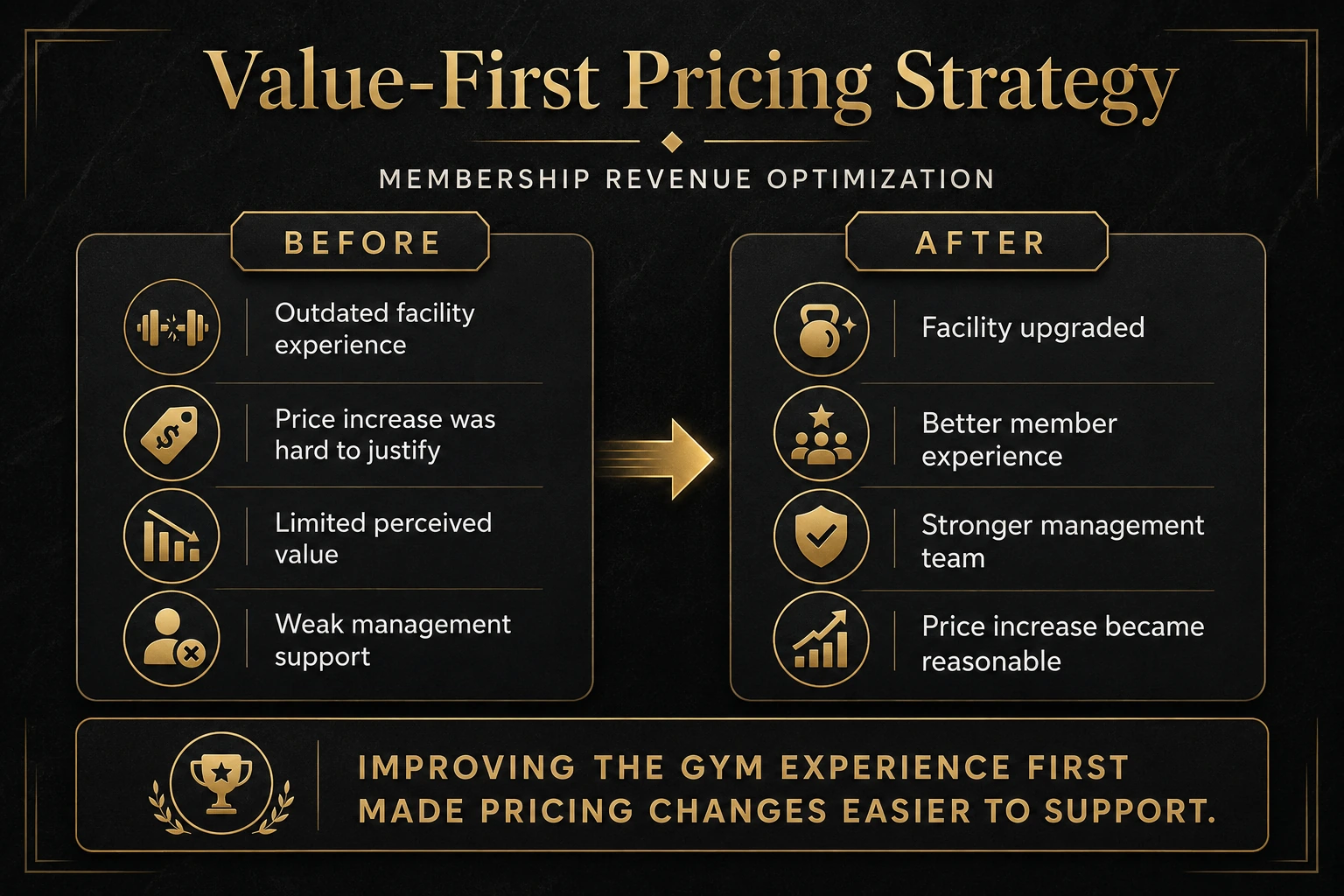
-
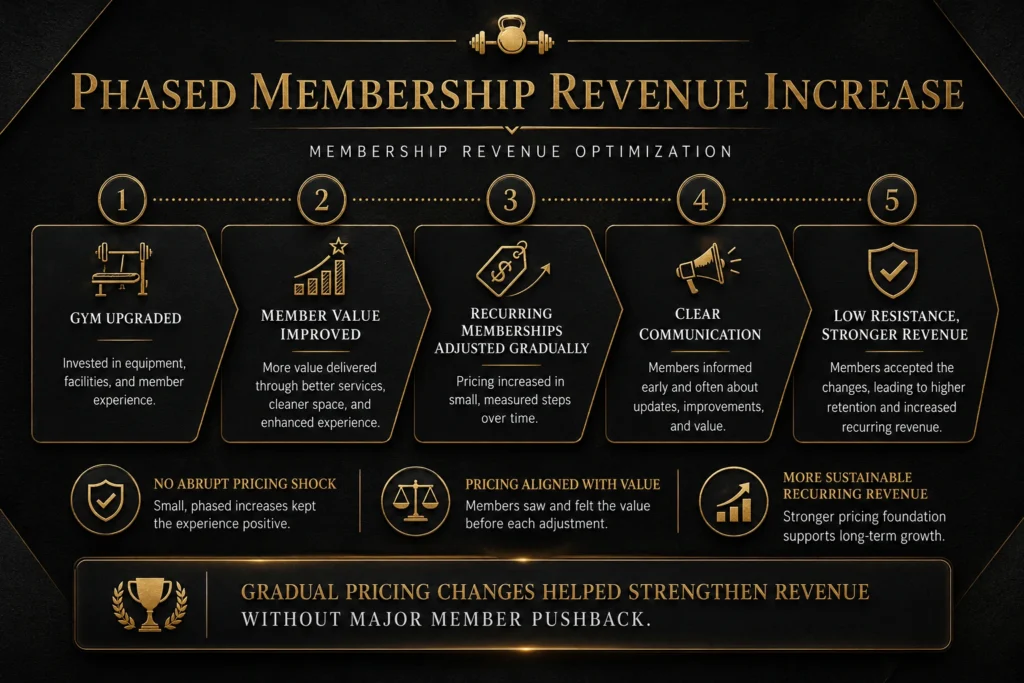
- Gallery image showing how recurring membership pricing was increased gradually after the gym experience improved.
-
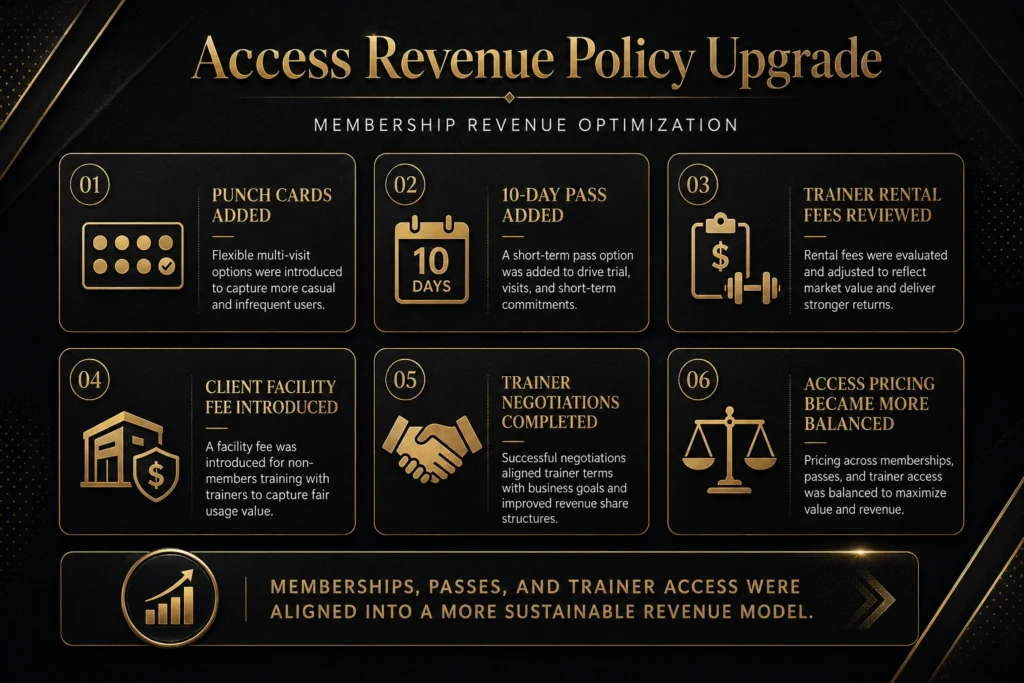
- Gallery image showing how memberships, passes, and trainer access pricing were aligned into a more sustainable revenue model.
The gym increased revenue in a way that felt justified, controlled, and aligned with the stronger member experience.
The pricing changes were introduced only after the gym had become a stronger product. Because members could clearly see the improvements in facility quality, service, equipment, cleanliness, and overall experience, the recurring membership increases generated very little resistance.
Recurring revenue became stronger
Phased membership rate increases helped the gym build a more sustainable monthly revenue base without creating a sudden negative reaction from members.
Pricing matched the upgraded value
The new pricing structure was easier to explain because the gym experience had already been strengthened through better facilities, stronger operations, and more professional management.
Access revenue became more balanced
New pass products, updated trainer access pricing, and a small facility fee for trainer clients helped the gym better capture the value and operating cost of facility usage.
Need to increase gym revenue without creating unnecessary member resistance?
Membership pricing works best when it is supported by visible value. A stronger facility experience, clearer access products, better communication, and a balanced trainer access policy can help a gym increase revenue in a way that is credible, professional, and sustainable.
No pressure — the first conversation is simply to understand the current pricing and revenue concerns and determine whether an operational review or revenue strategy project would be a practical next step.