Revenue LeakageAudit.
A gym revenue leakage audit focused on partner access programs, insurance-based agreements, discount structures, and unfavorable contracts that weakened full-price memberships, reduced pricing control, and lowered revenue quality.
Identifying hidden revenue losses caused by third-party access programs, insurance-based agreements, and unfavorable contract terms.
At first glance, several partner and insurance-based access programs appeared to increase gym traffic. A closer review showed that higher usage did not always produce stronger revenue. Some programs gave participants access to the same facility at a much lower effective price than a direct membership, while the gym received limited per-visit reimbursement and retained less control over pricing, capacity, and facility usage.
The gym revenue leakage audit examined existing agreements, reimbursement structures, access terms, and their effect on direct membership revenue. The project identified contracts that created financial or capacity risk and established a clearer review process to prevent future agreements from weakening pricing control, cannibalizing memberships, or increasing facility usage without proportional revenue growth.
More visitors did not automatically create stronger revenue.
Several third-party access and insurance-based programs created the appearance of growth by bringing more people into the gym. The underlying economics were less favorable: the club often received limited per-visit reimbursement while still carrying the full cost of facility access, equipment use, staffing, cleaning, and member experience.
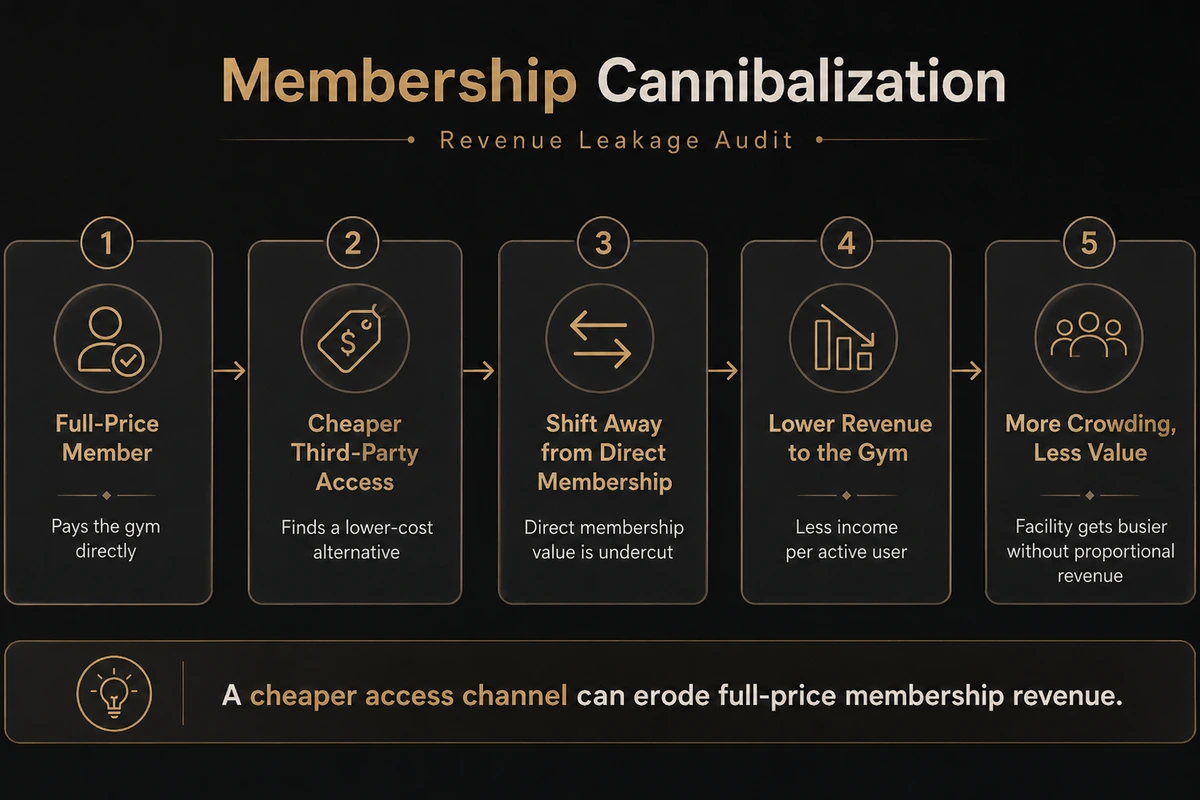
The larger issue was membership cannibalization. Some customers could access the same gym through partner platforms at a lower effective cost than a direct membership, creating pressure on full-price memberships while increasing crowding and reducing control over capacity.
The project was not about rejecting every partnership. It was about separating useful acquisition channels from agreements that diluted membership value, overloaded the facility, and weakened revenue quality.
Higher visitor volume from partner programs did not always produce proportional revenue, especially when reimbursement was low, capped, or disconnected from actual facility usage.
Some customers had a financial incentive to stop paying the gym directly and use lower-cost third-party access to the same facility instead.
The gym could become busier without becoming financially stronger, creating crowding, equipment pressure, and a weaker experience for full-price members.
Some existing and proposed agreements included unfavorable economics, limited pricing control, and termination terms that made a timely exit more difficult.
Access programs were reviewed against direct membership economics and adjusted to protect pricing control, facility capacity, and revenue quality.
Existing agreements audited
Partner access and insurance-based agreements were reviewed to understand how each program affected revenue, facility usage, membership value, and long-term control over access.
Program economics compared
Each program was compared against direct membership revenue, including per-visit reimbursement, usage caps, capacity pressure, and the risk of full-price member migration.
High-risk programs addressed
Programs that weakened revenue quality or reduced control over capacity were renegotiated, restructured, or exited where practical while avoiding unnecessary additional cost.
Future proposals screened
New partnership offers were evaluated before approval, and proposals with weak economics, unfavorable exit terms, or excessive capacity risk were rejected before they could affect the business.
Visualizing how partner access programs affected revenue, memberships, and facility capacity.
Because this was a business-model audit rather than a physical renovation, the gallery uses case-study visuals to compare direct memberships with third-party access, illustrate the risk of membership cannibalization, and show why revenue quality, pricing control, and facility usage must be evaluated together.
-
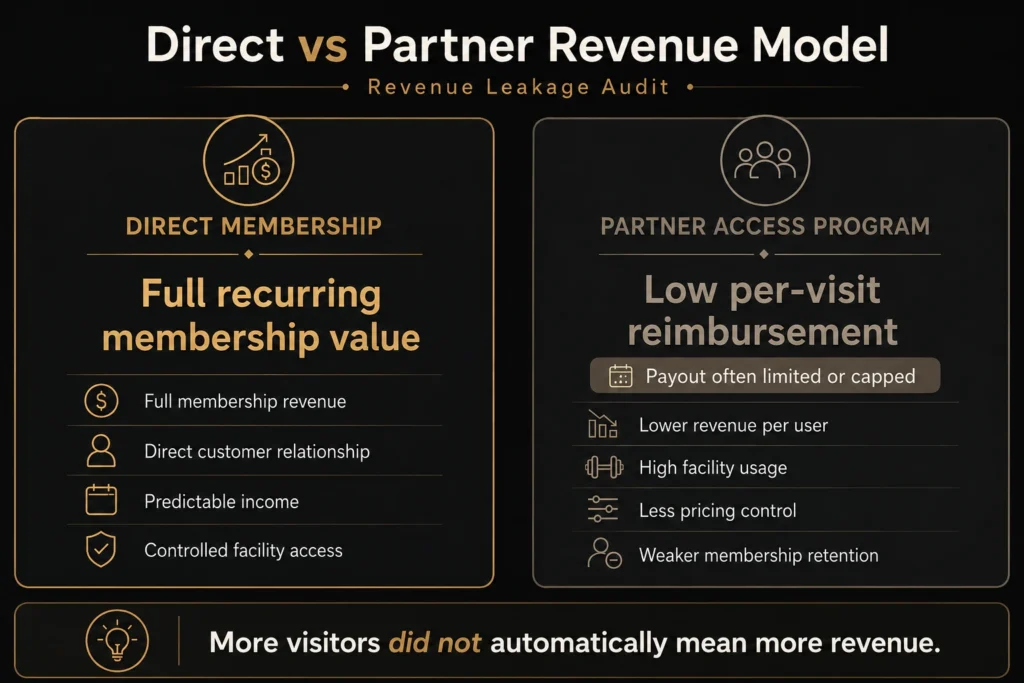
- Gallery image comparing direct membership revenue with lower per-visit partner access reimbursement.
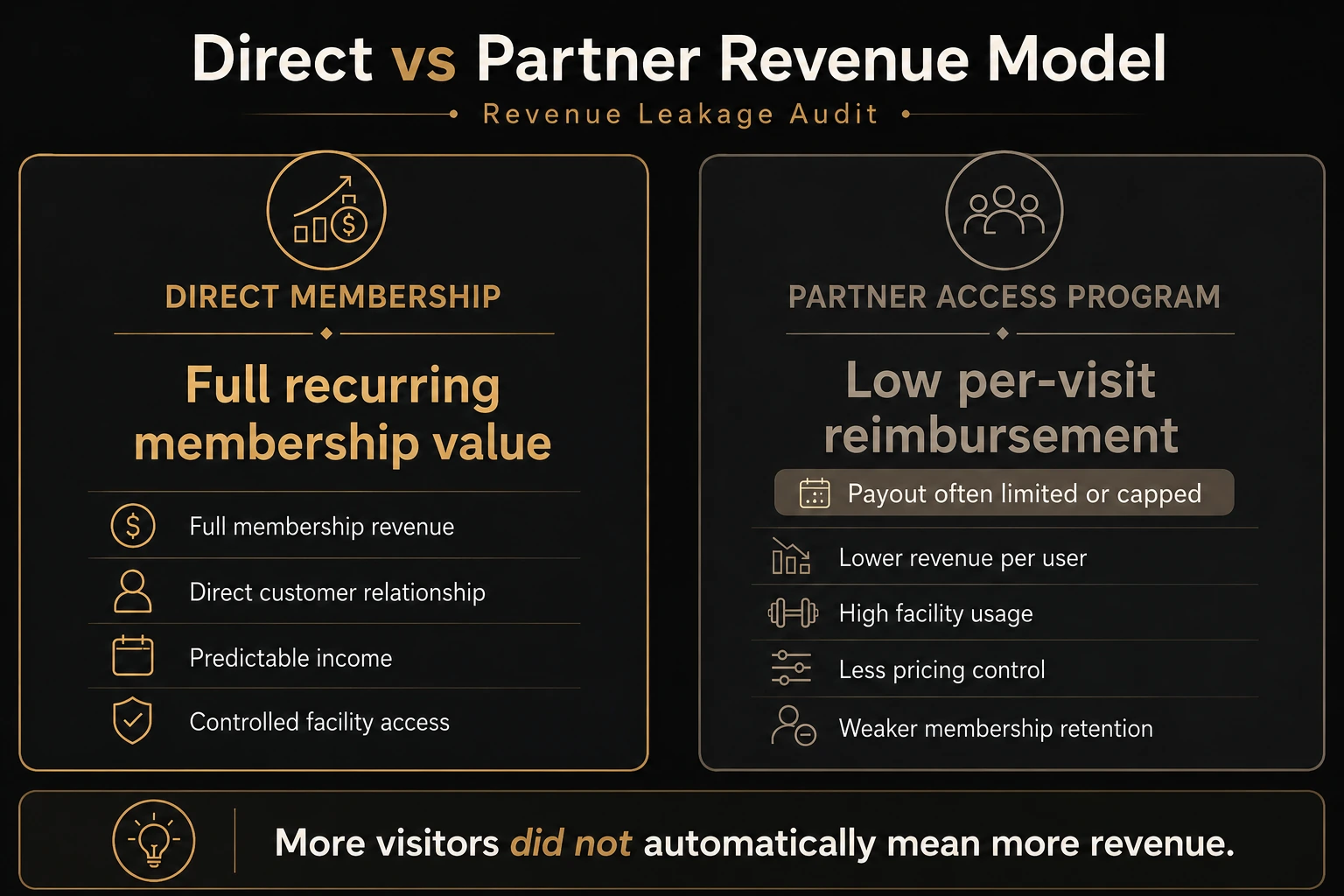
-
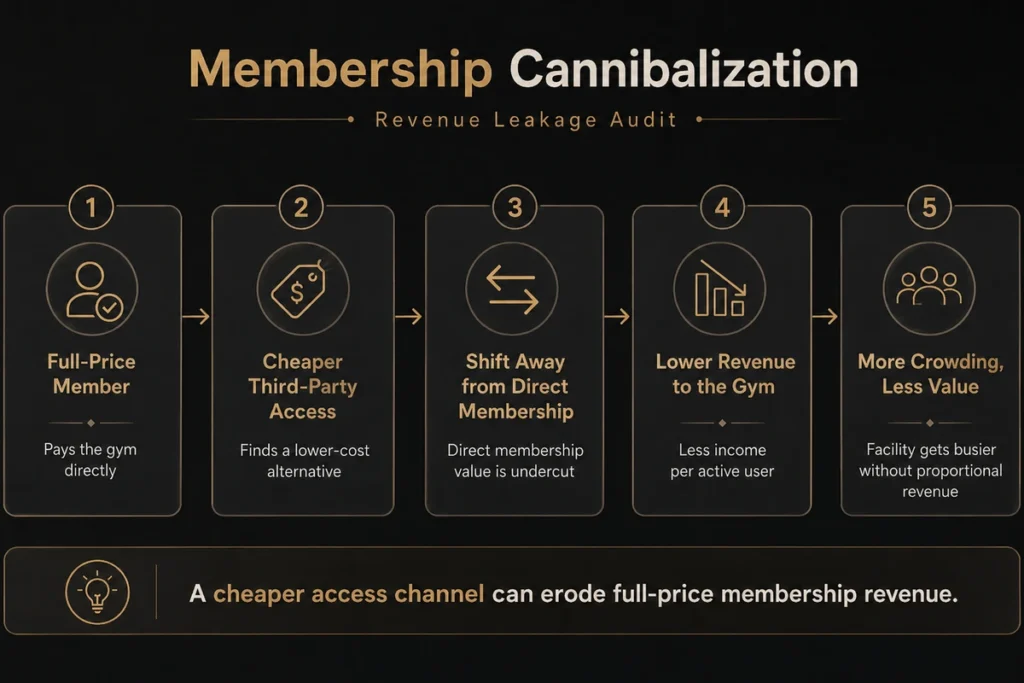
- Gallery image showing how lower-cost third-party access can shift members away from direct gym memberships and reduce revenue quality.
-
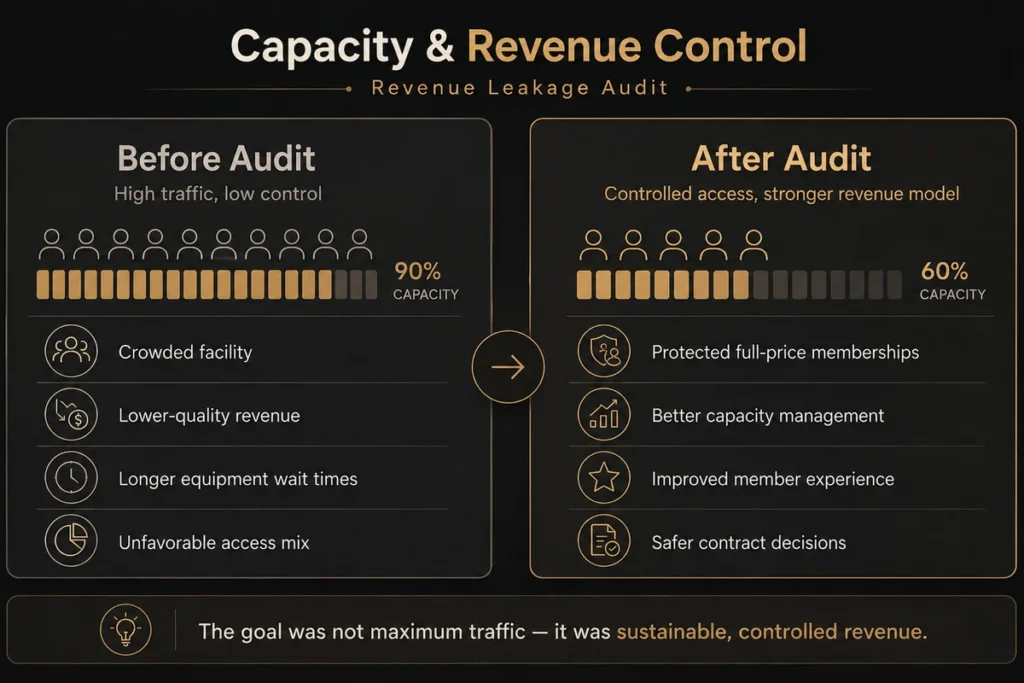
- Gallery image showing how the audit shifted the gym from high traffic with low control toward a more sustainable access and revenue model.
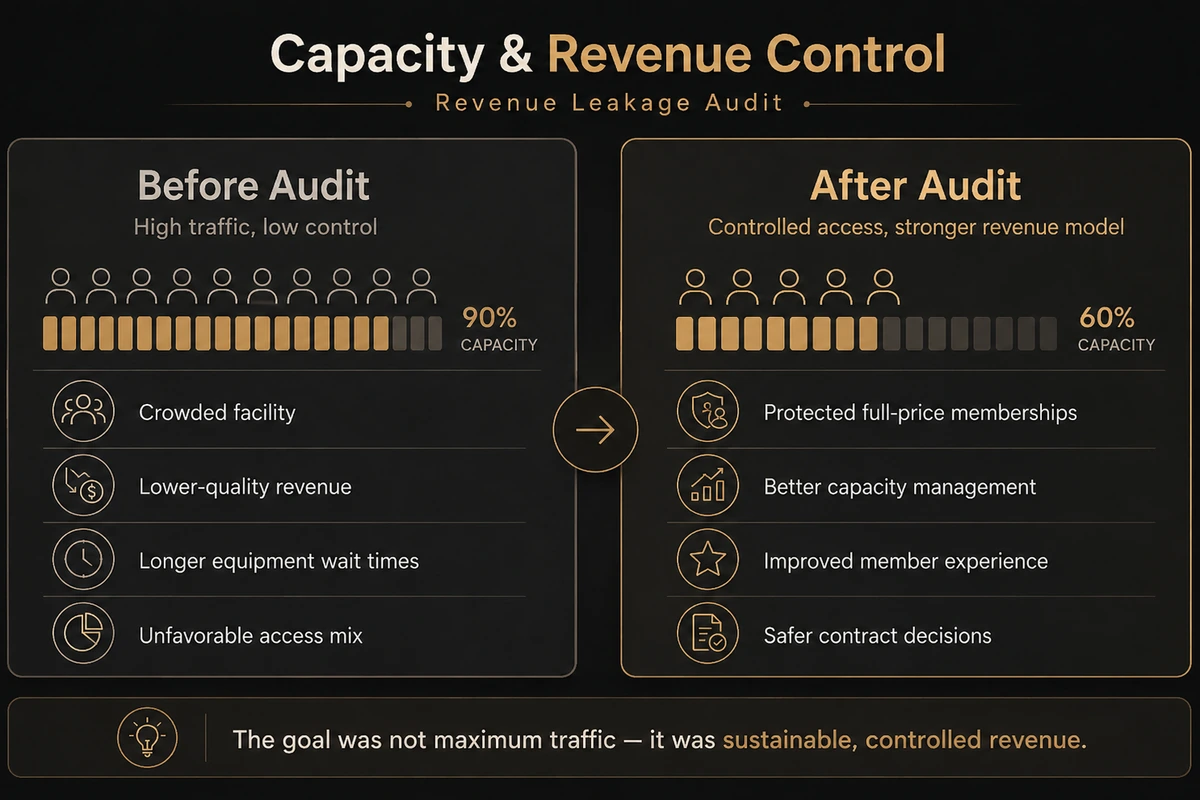
The audit helped the gym protect direct membership revenue, strengthen capacity control, and make safer partnership decisions.
Instead of treating every new visitor as positive growth, the project reframed access programs around revenue quality, member experience, pricing control, and the long-term sustainability of the business model.
Direct membership value was better protected
By identifying programs that created a lower-cost alternative to direct membership, the gym reduced exposure to membership cannibalization and protected the value of full-price access.
Revenue quality improved
The focus shifted from raw traffic volume to access channels that supported healthier economics, stronger pricing control, and better alignment with the gym’s positioning.
Capacity decisions became more disciplined
The gym gained a clearer framework for deciding which partnerships supported the business, which programs created overcrowding risk, and which agreements should be avoided, renegotiated, or exited.
Need to identify where your gym may be losing revenue without realizing it?
In a capacity-limited business such as a gym, more traffic does not always mean stronger performance. A structured review of access programs, reimbursement terms, contracts, pricing, and member behavior can reveal where revenue is being diluted, capacity is being consumed without proportional return, and stronger controls are needed.
No pressure — the first conversation is simply to understand the current access programs, contracts, pricing, and capacity concerns and determine whether a focused revenue leakage audit would be a practical next step.