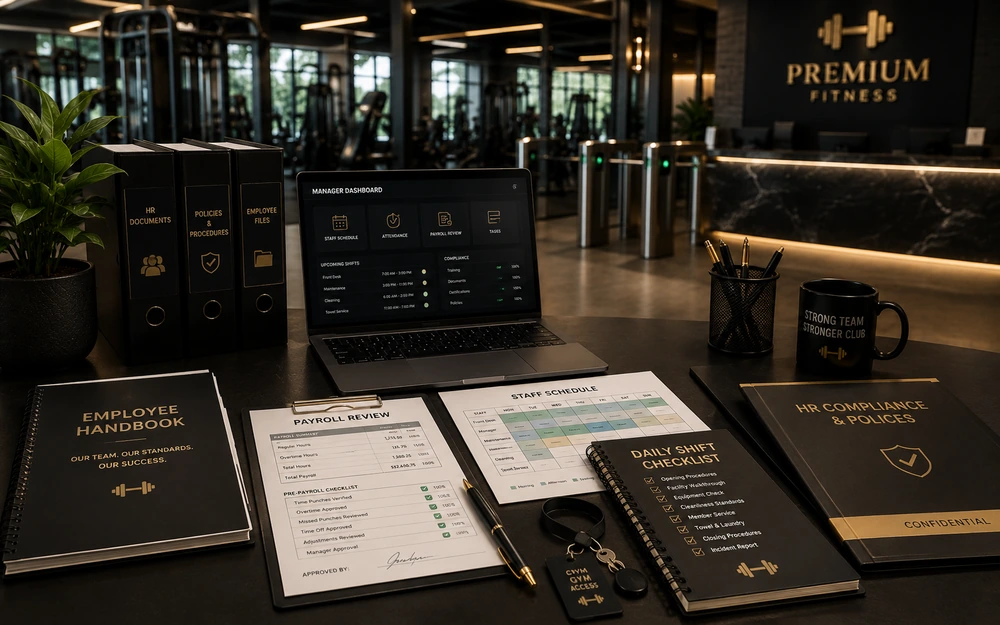
Gym Staff TrainingSystem.
A gym staff training system built as a website-based LMS with structured courses, quizzes, and knowledge base materials to improve onboarding consistency, reduce new-hire mistakes, and decrease the amount of direct manager involvement required.
Building a structured training and knowledge base system that reduced management dependency during employee onboarding.
Each time a new employee joined the team, managers had to pause regular work, repeat the same explanations, answer basic questions, and personally guide the employee through every stage of onboarding. This made training time-consuming, difficult to standardize, and heavily dependent on management availability.
The gym staff training system was built as a website-based LMS with structured courses, knowledge base materials, quizzes, and supervised practical application. Employees could study core procedures independently, test their understanding, and then apply the material in real gym operations with focused manager review.
Training new employees depended too heavily on direct manager involvement.
Each time a new employee joined the team, a manager had to pause regular responsibilities, repeat the same explanations, answer basic questions, and personally guide the onboarding process. This disrupted normal operations and made training dependent on one person’s time and availability.
Gym roles also included many small but important responsibilities that could be forgotten, misunderstood, or performed inconsistently. Checklists helped organize tasks, but they could not fully explain procedures, expectations, safety requirements, client interactions, or the reasoning behind operational decisions.
Repeated one-on-one explanations pulled management away from planning, facility operations, staff oversight, and other priorities.
Without a structured learning system, employees could receive different information depending on the trainer, available time, and circumstances of the onboarding process.
Employees needed more than task lists; they needed clear instruction on procedures, expectations, safety, client service, and practical decision-making.
A website-based LMS was created so employees could learn core procedures before beginning guided practical training.
The gym staff training system combined structured courses, knowledge base materials, quizzes, and supervised application so new employees could prepare independently before completing real operational tasks with focused manager guidance.
Training topics organized
Employee responsibilities were divided into clear learning areas covering daily operations, client interaction, facility procedures, safety expectations, and role-specific knowledge.
LMS courses developed
Website-based courses allowed employees to study key procedures independently instead of relying entirely on repeated one-on-one explanations from management.
Knowledge checks added
Quizzes helped employees review the material, confirm understanding, and identify weak areas before progressing to practical work.
Practical training structured
After completing the courses and quizzes, employees applied the material on the gym floor with manager guidance, making the final stage of onboarding more focused and efficient.
From repeated manager-led explanations to a structured digital learning system.
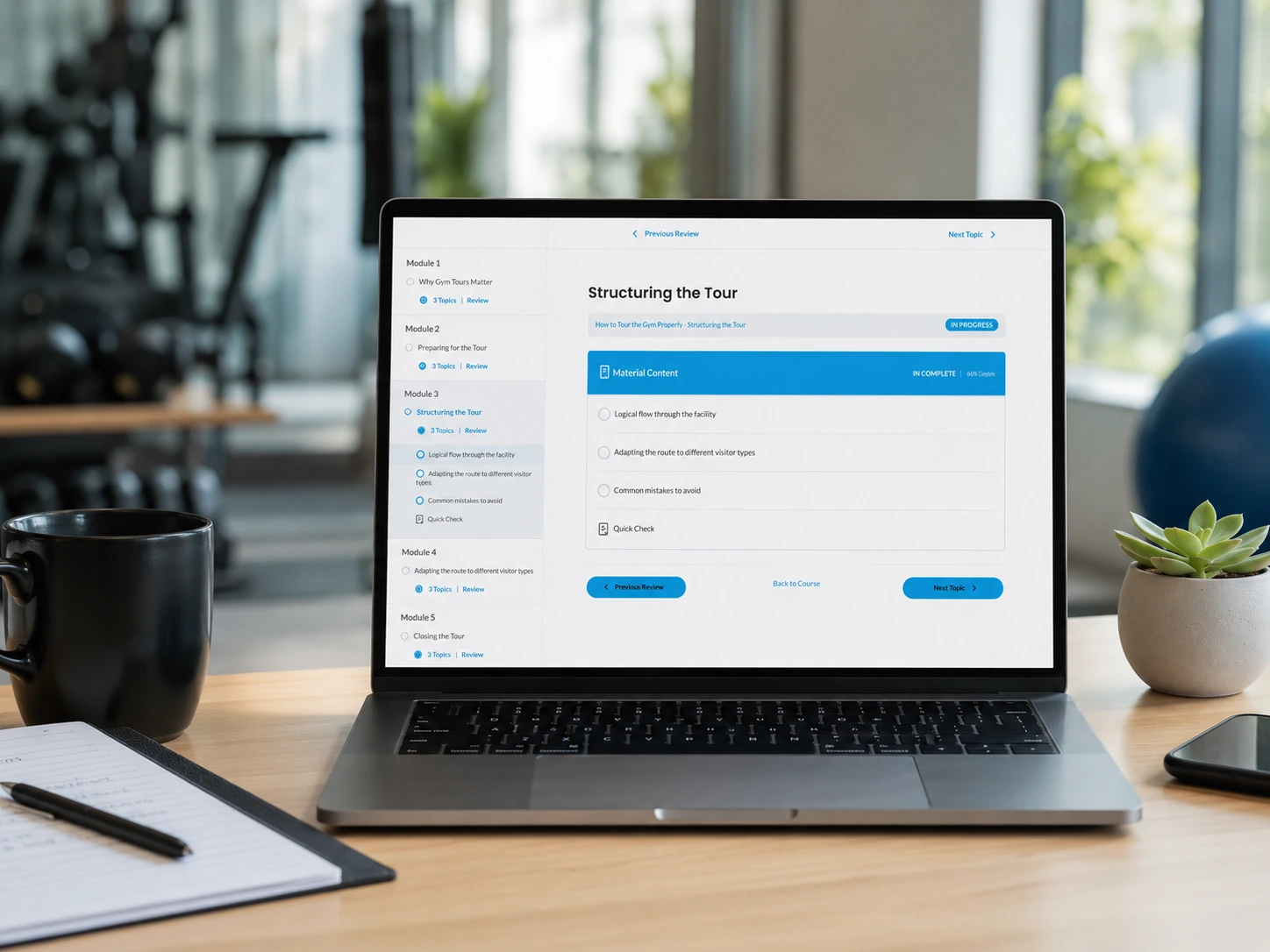
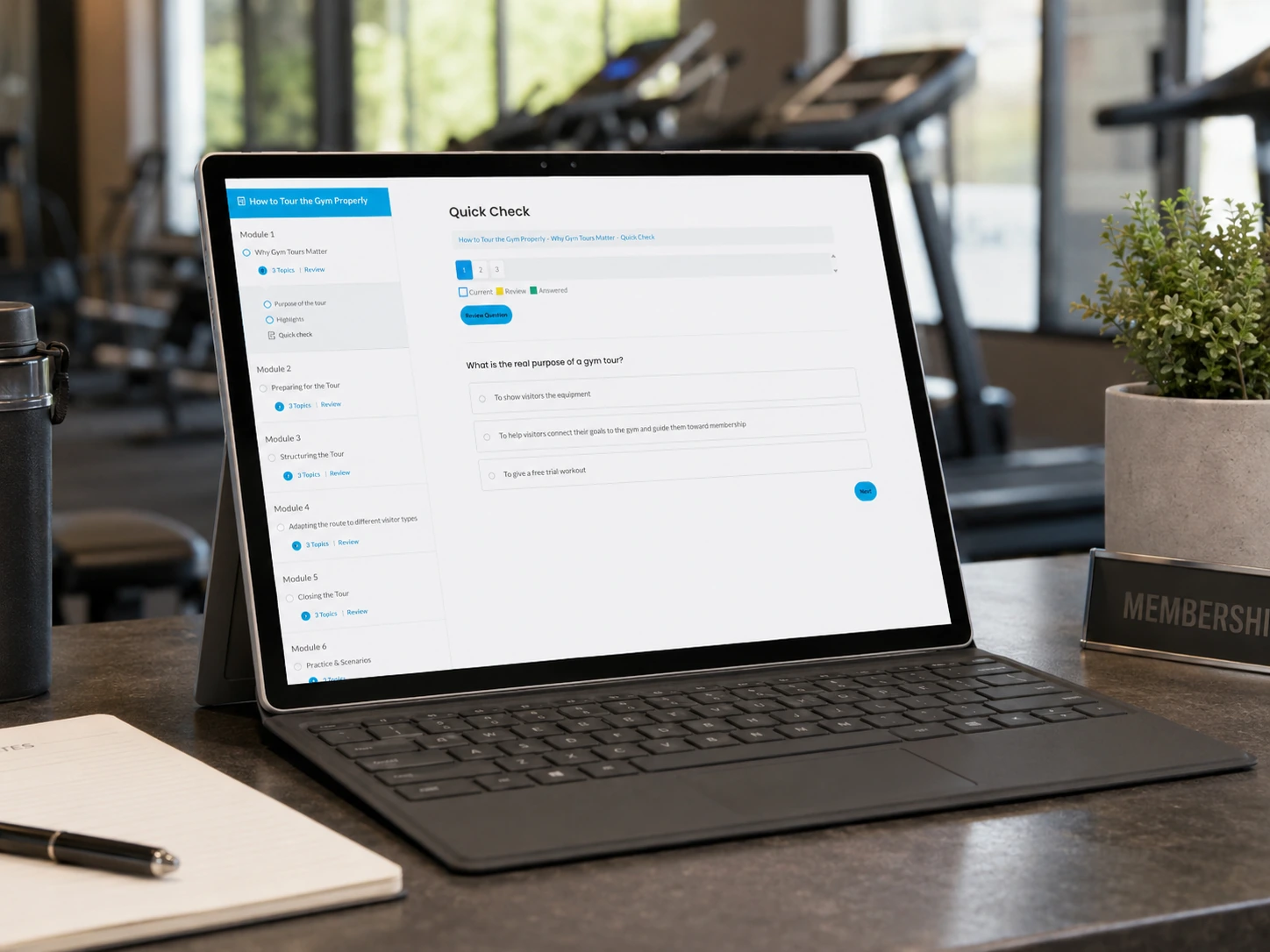
The gallery shows the website-based LMS, course organization, quiz workflow, knowledge base materials, and practical training sequence created to help new employees learn core procedures independently before applying them under manager supervision.
-
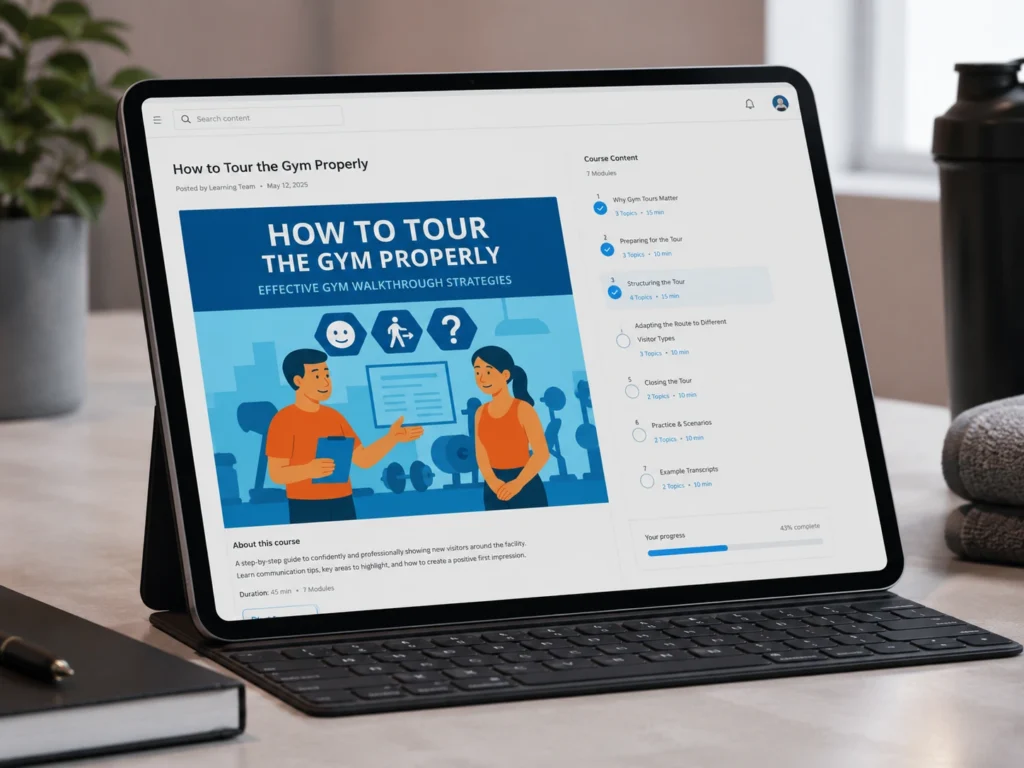
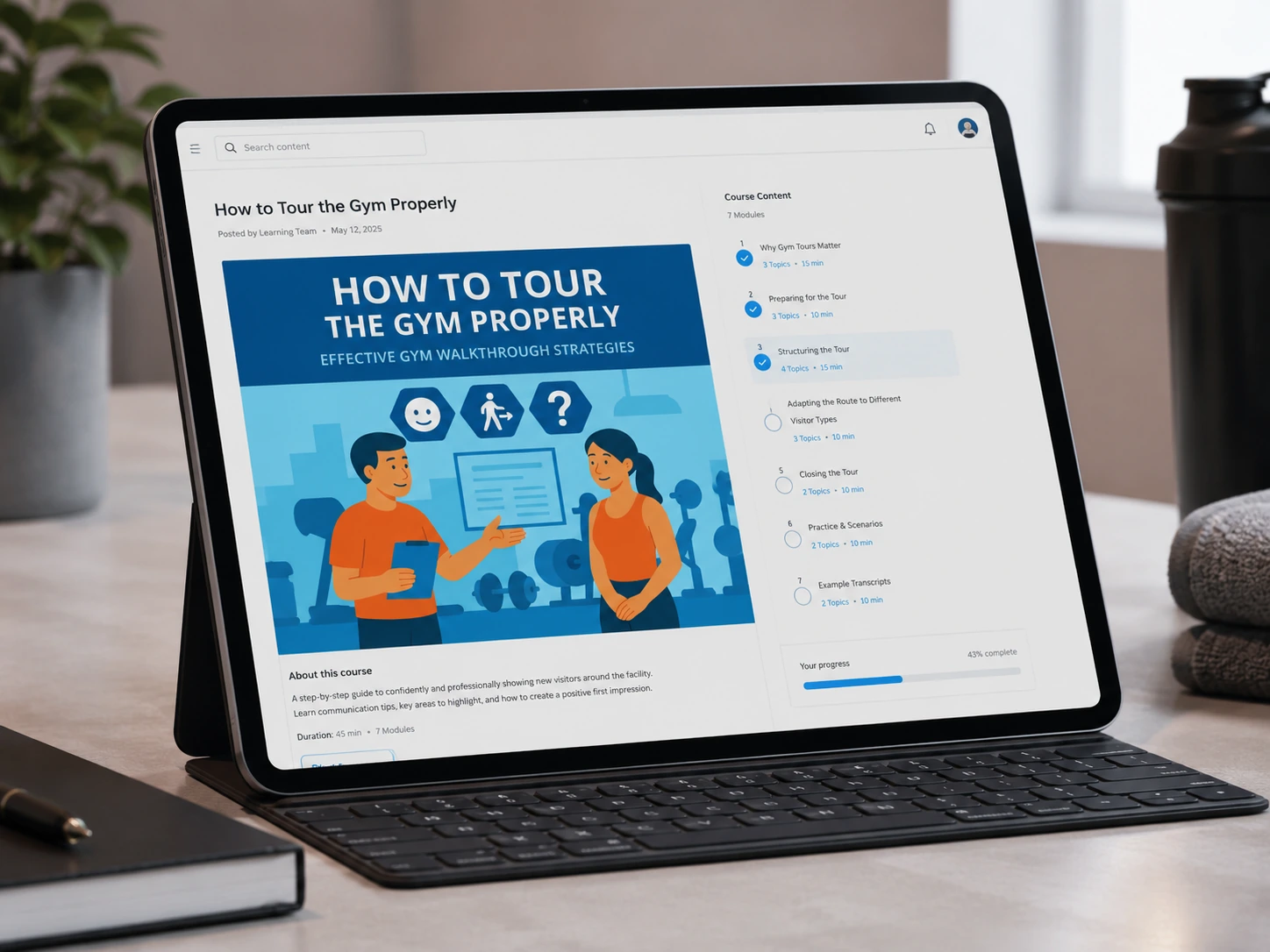
- Digital training module teaching staff how to conduct effective gym tours and improve the member experience.
-
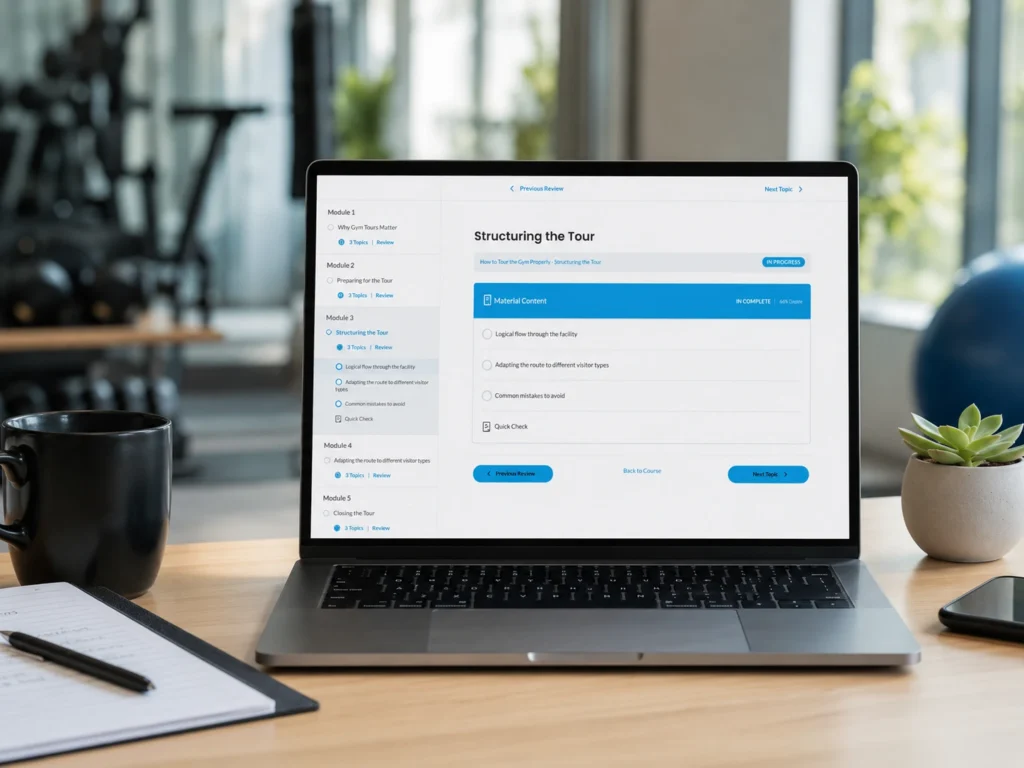
- Digital training lesson showing staff how to structure a gym tour for prospective members.
-
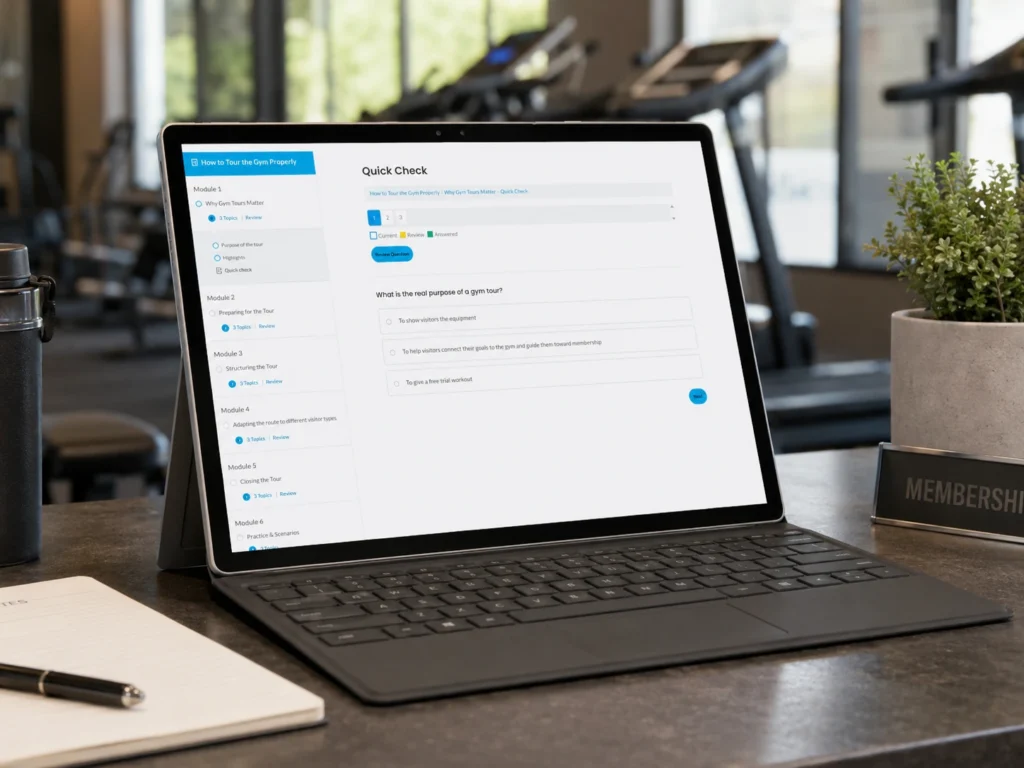
- Digital quick check module used to confirm staff understanding during gym training.
The training system reduced management workload while improving new-employee readiness.
By moving core theory, quizzes, and knowledge base materials into a structured LMS, employees could prepare before practical training, making onboarding more consistent, focused, and less dependent on repeated one-on-one explanations.
Less manager time required
Managers spent less time repeating basic information because employees could complete the first stage of training independently before receiving practical guidance.
More consistent onboarding
Structured courses and quizzes helped each new employee receive the same core information regardless of trainer availability, schedule, or timing.
Fewer new-hire mistakes
Employees entered practical training with a stronger understanding of procedures, expectations, and safety requirements, helping reduce common early-stage errors.
Ready to make gym staff training faster, more consistent, and less dependent on management?
A structured gym staff training system can organize employee knowledge into courses, quizzes, reference materials, and practical onboarding steps that reduce management workload, improve new-hire readiness, and create a more reliable training process.
No pressure — the first conversation is simply to understand the current training process, onboarding challenges, and determine whether a structured staff training system would be a practical next step.